

Rooted in Country
A reflection on NAIDOC Week 2026, the ancient wisdom held within Australian native botanicals, and our enduring gratitude to the Country and the peoples who have always known these plants.
NAIDOC Week 2026: The Next Generation
Every year in the first full week of July, Australia pauses to celebrate, honour, and reflect. NAIDOC Week, which this year runs from 6 to 13 July, is a national celebration of the history, culture, and achievements of Aboriginal and Torres Strait Islander peoples. It is not a week of mourning. It is a week of pride, of story, and of recognition that the oldest continuous living culture on Earth is alive, vital, and ongoing.
The 2026 theme is The Next Generation: Strengthening Culture, Language and Country. It is a call to remember that knowledge is not static. It is carried forward, living in the hands and voices of those who come after. It is spoken in language, sung in ceremony, grown in Country, and passed down through generations who have never stopped learning from the land.
At Saya, this theme lands close to home. We are a brand built on the intelligence of the Australian landscape. We work with native botanicals whose wisdom stretches back tens of thousands of years. And we believe that honouring those origins is not a gesture made once a year, but a responsibility woven into everything we do.
The oldest continuous living culture on Earth is alive, vital, and ongoing.
Country: More Than Land
To understand native Australian botanicals, you first have to understand Country.
In Aboriginal and Torres Strait Islander cultures, Country is not a geographical boundary or a piece of real estate. Country is a living, breathing, spiritual entity. It encompasses land, water, sky, seasons, animals, plants, ancestors, stories, and the relationships between all of these things. People do not simply live on Country. They belong to it. They are accountable to it. And they have, for over 65,000 years, been its careful, attentive custodians.
This relationship gave rise to one of the most sophisticated systems of ecological knowledge on Earth. Through observation across millennia, through ceremony and season, through the accumulated wisdom of elders passed to children, Aboriginal peoples mapped the behaviour of every plant, animal, and waterway on their Country with a precision that modern science is only beginning to understand and validate.
The plants that now form the heart of our formulations were not waiting to be discovered. They were known. They were named. They were used. They were honoured. Long before a cosmetic scientist identified the antioxidant compounds in Kakadu Plum, the Yawuru people of the Kimberley and the communities of Arnhem Land had named it gubinge and murunga, and had been harvesting, eating, trading, and applying it for thousands of years.
This is the foundation upon which everything else rests. And it is a foundation we hold with humility.
Plants That Learned to Survive
Australia is one of the most extraordinary botanical environments on Earth, and the reasons for this are written in deep geological time.
When the supercontinent Gondwana began to break apart roughly 35 to 45 million years ago, Australia drifted northward in near-complete isolation. Cut off from the rest of the world's flora, its plants had to develop their own solutions to their own problems. There was no cross-pollination of evolutionary strategy, no borrowing of adaptations from neighbouring continents. What emerged from that isolation is a flora found nowhere else on the planet.
And then there is the land itself. Australian soils are among the oldest and most heavily leached on Earth. Much of the continent receives brutal UV radiation through one of the thinnest parts of the ozone layer. Inland regions cycle between severe drought and sudden flood. Temperatures swing wildly. Fire is not a disaster here but a rhythm, a pulse, something the land has always known how to answer.
In response to all of this, Australian native plants evolved extraordinary concentrations of protective compounds. Antioxidants to shield against UV damage. Antimicrobials to ward off pathogens in warm, humid environments. Regenerative enzymes triggered by drought stress. Secondary metabolites of extraordinary complexity, produced in quantities that far exceed what other plants need in less demanding climates.
The harsher the conditions, the more potent the plant. The more the land asks of them, the more they give. When we use these botanicals in our formulations, we are not simply adding an ingredient. We are drawing on the encoded survival intelligence of a plant that has spent millions of years learning how to protect itself, and is now extending that protection to skin.
The harsher the conditions, the more potent the plant. This is Australia's botanical truth.
The Plants, Their Peoples, Their Knowledge
We want to speak plainly here, and with care. The knowledge of these plants does not originate with science. It originates with the First Nations peoples on whose Country these plants grow. Western research has measured, quantified, and confirmed what Aboriginal Australians always knew. What follows is a small and grateful acknowledgement of that.
Kakadu Plum (Gubinge / Murunga)
To the Yawuru people of the Kimberley, this fruit is gubinge. In the communities of Arnhem Land, it is murunga. The names vary across the many language groups whose Country it grows through, but the knowledge is consistent: this small, green-grey fruit is remarkable.
It was eaten fresh in season, dried and preserved for leaner times, and applied to wounds and skin ailments for its powerful antibacterial and healing properties. It was traded across vast distances, valued not only as food but as medicine. Communities understood intuitively what biochemists later confirmed: Kakadu Plum contains the highest recorded concentration of Vitamin C of any fruit on Earth, up to 100 times that of an orange, alongside ellagic acid, gallic acid, and a spectrum of polyphenols that speak directly to skin health, brightness, and resilience.
We use Kakadu Plum in our formulations with the full weight of this history in mind. It is not an exotic ingredient. It is a plant with a name, a Country, and tens of thousands of years of documented use.
Desert Lime
Desert Lime grows in the harshest inland country of Australia: the mulga scrub, the saltbush plains, the red-dust stretches of western Queensland, New South Wales, and South Australia. It is the only citrus native to Australia, and it survives conditions that would kill any cultivated variety, extreme heat, frost, prolonged drought, and nutrient-poor soils.
Aboriginal peoples in these regions used Desert Lime as a food source, harvesting the tiny, intensely flavoured fruit when the season allowed. Its astringent, cleansing properties were well understood. The fruit's extraordinary resilience is biologically encoded: its high folate content, AHA activity, and antioxidant profile are a direct response to the stress of its environment. What the land demands, the plant produces.
Lemon Myrtle
Lemon Myrtle is native to the subtropical rainforests of Queensland, the very landscape that shaped Saya. Its leaves contain the highest concentration of citral of any plant on Earth, giving it a lemon scent more intense and true than lemon itself. Aboriginal peoples used it as a flavouring, a medicine, and in smoking ceremonies, where its antimicrobial and antifungal properties served practical as well as ceremonial purposes.
There is something quietly meaningful to us in the fact that this plant grows in our own backyard. That the Country which inspired this brand also holds one of its key ingredients feels less like coincidence and more like belonging.
Muntries
Small, round, and spiced like an apple, muntries (Kunzea pomifera) are one of Australia's oldest documented bush foods. The Ngarrindjeri people of South Australia and other communities of the southern regions ate them fresh and dried them into cakes, carried as sustenance on long journeys. Dried muntries could travel for months without spoiling.
Their antioxidant content is extraordinary, measured at up to four times that of blueberries. Their skin benefits, soothing, anti-inflammatory, and protective, were understood through use long before they were measured in a laboratory.
Why This Land Produces Something Singular
Beyond any individual botanical, there is something worth understanding about the land itself.
The ancient, leached soils of Australia are so low in nutrients that plants have evolved to produce extraordinary quantities of secondary metabolites, the chemical compounds that protect them from UV, pathogens, and environmental stress. In richer soils, plants can grow fast and large without needing these compounds in high concentration. In Australian soils, producing them is the only way to survive.
This is why Australian native botanicals consistently test at higher potency than their global counterparts. Kakadu Plum's Vitamin C levels are not an anomaly: they are a logical outcome of a plant doing everything it can to survive and thrive. Every compound in every native botanical we use carries that same logic: a plant's hard-won answer to a hard country.
There is also the matter of time. Sixty-five million years of isolation. Tens of millions of years of adaptation without interruption. The biochemical intelligence in these plants has been refined across a timespan that makes modern agriculture look like a footnote.
Sixty-five million years of isolation. Tens of millions of years of uninterrupted adaptation. This is the intelligence we are privileged to work with.
What This Means to Saya
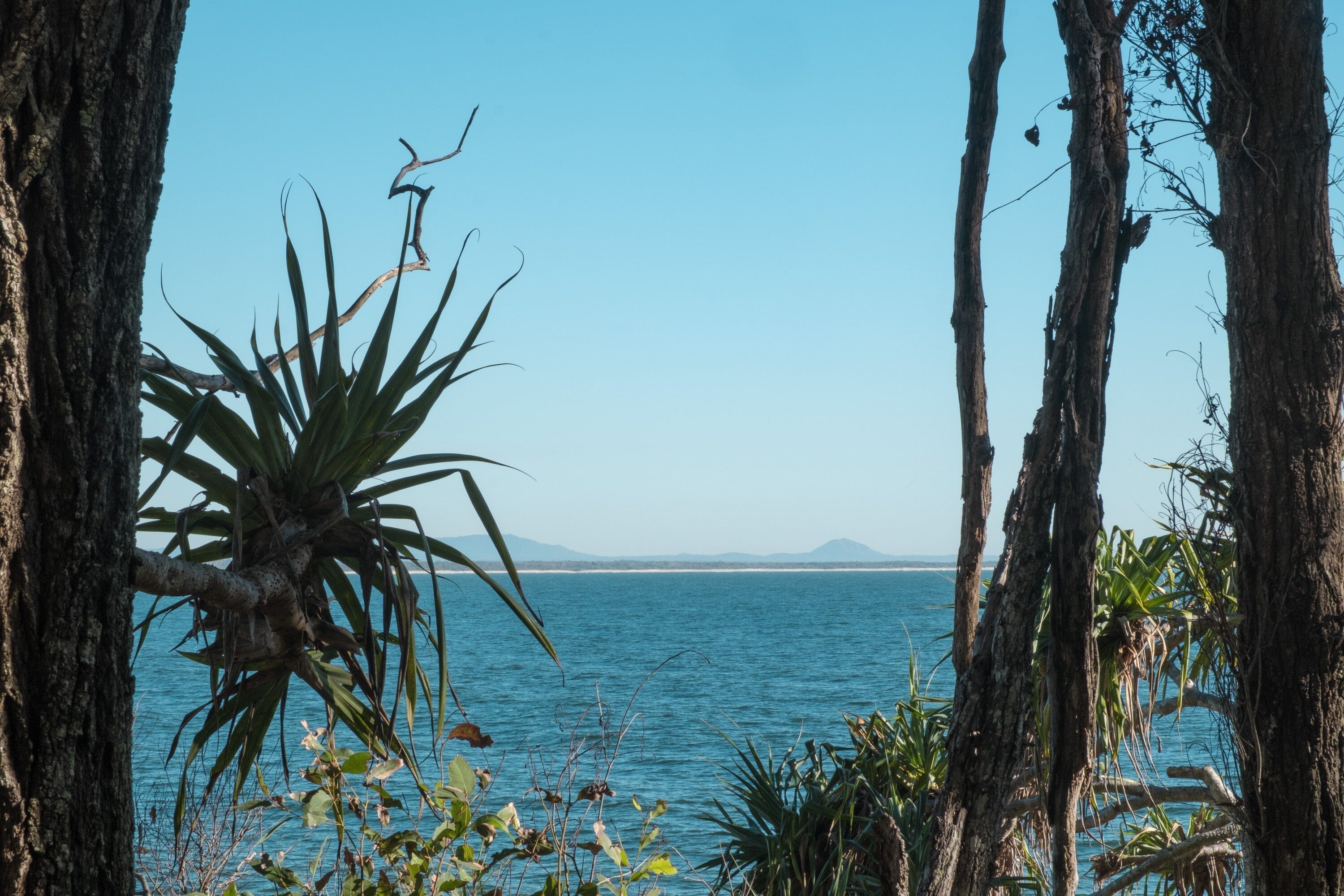
Saya was founded in Noosa, on the Country of the Kabi Kabi and Jinibara peoples. This coastline, these hinterland forests, this subtropical light: this is the landscape that shaped the brand. It shaped the founder. It shaped the idea that skincare should feel like the land it comes from, considered, alive, and deeply connected to something real.
We use native Australian botanicals because they are, quite simply, the most remarkable ingredients we have access to. Not because they are fashionable, and not because the word native reads well on a label, but because every single one of them carries a body of knowledge and a level of biological complexity that we have profound respect for.
That respect means being honest about where this knowledge comes from. It means acknowledging that these plants were never waiting to be discovered by the cosmetic industry. They were always known, always used, always valued by the peoples whose Country they grew on. When we talk about the intelligence of native botanicals, we are also talking about the intelligence of First Nations peoples who understood and worked with these plants for tens of thousands of years before modern science arrived to agree with them.
Saya does not claim a cultural connection we do not have. What we do claim is gratitude. Gratitude for the land. Gratitude for the knowledge that has been held here since long before this country was called Australia. Gratitude for the plants themselves, and for the chance to work with them thoughtfully and with care.
The Next Generation
This year's NAIDOC theme, The Next Generation: Strengthening Culture, Language and Country, asks all of us to think about what we pass forward.
For First Nations communities across Australia, that means continuing the work of keeping language alive, of maintaining connection to Country, of ensuring that the ecological and spiritual knowledge that has sustained this continent for 65,000 years is carried into the future. It is an act of extraordinary courage and love.
For us, it means something smaller but no less sincere. It means being a brand that tells the truth about its ingredients. That celebrates the Country these plants come from. That does not flatten a 65,000-year-old story into a marketing line. That passes on, to every person who uses a Saya product, a little of the wonder we feel when we hold a Kakadu Plum, or breathe in the sharp green scent of Lemon Myrtle, and remember what an extraordinary piece of the world we are standing on.
The land holds everything. We are simply grateful to work with a fraction of what it offers.
Acknowledgement of Country
Saya was born in Noosa, on the lands of the Kabi Kabi and Jinibara peoples, who have been the custodians of this Country for thousands of generations. We pay our respects to Elders past, present, and emerging, and to all Aboriginal and Torres Strait Islander peoples across the Country whose knowledge, care, and deep connection to this land makes everything we do possible.
Read more

Leave a comment
All comments are moderated before being published.
This site is protected by hCaptcha and the hCaptcha Privacy Policy and Terms of Service apply.