

The Architecture of Skin
Understanding collagen, why it breaks down, and how to actively support it through every decade.
Collagen is the most abundant protein in the human body. It forms the scaffold that holds the skin in place, provides its tensile strength, and gives it the capacity to spring back after movement. It accounts for roughly 70 to 80 percent of the dermis by dry weight. When it is abundant and well-organised, skin looks firm, smooth, and alive. When it is depleted or disorganised, the visible changes follow precisely and predictably.
I think about collagen often, both in formulation and in how I talk about ageing skin. Not because it is a single answer to a complicated question, but because understanding it at the structural and biological level changes what you choose to do about it. The conversation around collagen in skincare is frequently oversimplified into before-and-after territory. This piece is an attempt to do something more useful: to explain the actual science, the real mechanisms of loss, and the ingredients and rituals that genuinely support it.
What Collagen Actually Is
Collagen is not a single compound but a family of fibrous structural proteins, with over 28 types identified in the body. In the skin, types I, III, and IV are most relevant. Type I collagen forms the dense, rope-like fibrils that make up the bulk of the dermal matrix and provide tensile strength. Type III is associated with younger, more elastic tissue and is produced in greater proportion during the skin's early decades. Type IV forms the basement membrane, the thin layer between the epidermis and the dermis that anchors the two layers together.
These collagen fibrils are produced by fibroblasts, specialised cells that sit within the dermis. Fibroblast activity is the engine of the skin's structural health. When fibroblasts are active and well-supported, they produce procollagen, which is then cleaved enzymatically and assembled into the organised fibril networks that give skin its architecture. When fibroblast activity slows, or when the environment around them becomes chronically inflammatory, production drops and the existing matrix begins to degrade faster than it can be replaced.
Alongside collagen, elastin forms the complementary network of fibres that gives skin its recoil. Where collagen resists deformation, elastin allows it and returns the skin to its original position. The two proteins work in concert, and the loss of both with age is what shifts skin from resilience to increasing fragility.
Collagen Through the Decades
The Twenties: Peak Production
Collagen production in the skin peaks in the early to mid twenties. At this stage, fibroblast activity is high, turnover is efficient, and the ratio of type III to type I collagen still favours the more elastic, pliant quality associated with youthful skin. The matrix is dense and well-organised. Structural proteins are being synthesised and degraded in a balanced cycle. Cell turnover occurs on a 28-day rhythm, and the skin's capacity to repair environmental damage is at its strongest.
This does not mean the twenties are a period without skin concerns. UV exposure in these years is accumulating silently in the dermis, even when the surface shows nothing. Sun damage at this stage is not yet visible, but it is already being written into the fibroblast environment in the form of oxidative stress and early matrix metalloproteinase activity. What happens in the twenties with UV protection and antioxidant defence will have a measurable impact on the skin's collagen reserves decades later.
The Thirties: The Shift Begins
From the late twenties onward, collagen synthesis begins to decline at approximately one percent per year. This figure is often cited and often dismissed, but the cumulative effect over a decade is significant. By the mid thirties, most people begin to notice the first visible changes: fine lines at expression points, a slight softening of the skin's surface tension, reduced luminosity. These are structural changes at the dermal level, not surface-level concerns.
The ratio of collagen types also shifts. Type III production decreases disproportionately relative to type I, so the skin loses some of the elastic quality associated with younger tissue. The dermis begins to thin incrementally. Cell turnover, which completed in 28 days in the twenties, now takes 35 to 40 days. Dead cells accumulate more readily at the surface, contributing to the dullness and uneven texture that often appears in this decade.
The Forties: Compounding Loss
In the forties, the rate of collagen degradation increasingly outpaces synthesis. Matrix metalloproteinases, the enzymes responsible for breaking down existing collagen and elastin, become more active relative to the skin's capacity to rebuild what they dismantle. The dermis thins more noticeably. The architecture of the skin becomes less organised at a microscopic level, which manifests as deeper lines, reduced elasticity, and the beginning of visible sagging in areas where the structural support network has thinned most significantly.
For women, the approach of perimenopause adds an additional layer of complexity. Oestrogen has a direct relationship with collagen density: it stimulates fibroblast activity, maintains the skin's moisture-binding capacity, and supports the genes involved in collagen synthesis. In the years approaching menopause, as oestrogen levels begin to fluctuate and eventually decline, collagen loss accelerates beyond the baseline one percent per year. Studies suggest that in the first five years following menopause, women lose approximately 30 percent of their dermal collagen. The impact is visible, and it is rapid relative to the gradual loss of the preceding decades.
The Fifties and Beyond: Structural Maintenance
By the fifties, the focus shifts from slowing loss to maintaining what remains and actively supporting whatever synthesis is still possible. The fibroblast population has diminished, and those remaining are less responsive. The basement membrane, formed largely by type IV collagen, thins and becomes less effective at anchoring the epidermis to the dermis, which contributes to the translucent, fragile quality that skin can develop in later decades.
Cell turnover, which took 28 days in the twenties, can now take 45 to 60 days. The capacity to respond to damage, repair after UV exposure, and recover from inflammation is significantly reduced. This is the decade in which consistency with collagen-supporting actives matters most, not because miracles are possible, but because the cumulative effect of daily, targeted support is the most powerful lever available.
Why Collagen Breaks Down
The Enzyme Problem: Matrix Metalloproteinases
Matrix metalloproteinases, or MMPs, are a family of enzymes whose natural role is to break down and remodel the extracellular matrix. They are essential to normal tissue maintenance and wound healing. The problem is that their activity is triggered and amplified by the very factors that accumulate with age and lifestyle: UV radiation, chronic low-grade inflammation, oxidative stress, and elevated cortisol. When MMP activity rises and fibroblast synthesis slows, the balance tips toward net loss. The collagen that is degraded is no longer fully replaced.
UV radiation is the single most potent activator of MMPs in the skin. A single acute sun exposure significantly upregulates MMP-1 and MMP-3 expression in the dermis. Across decades of cumulative exposure, this enzymatic erosion of the collagen matrix is the primary mechanism of photoageing: the deepening of lines, the loss of skin density, the textural changes that go beyond the intrinsic ageing process.
Oxidative Stress and Free Radicals
Free radicals are unstable molecules produced as a byproduct of normal cellular metabolism, and in greater quantities by UV exposure, pollution, and lifestyle factors including alcohol and smoking. They attack cellular structures indiscriminately, including the fibroblasts responsible for collagen production and the collagen fibrils themselves. Oxidative damage to the proline and lysine residues within collagen chains alters their cross-linking structure, making the resulting fibres less organised and less functional. Over time, this produces the disorganised collagen architecture visible under dermoscopy in aged and sun-damaged skin.
The skin has its own antioxidant defences, including vitamins C and E, superoxide dismutase, and catalase. But these systems are finite and become less efficient with age. Environmental exposure, poor diet, and chronic stress all deplete them faster than they can be replenished endogenously. Topical antioxidant support is not supplementary to this process. For many people in modern environments, it is essential.
Glycation: The Sugar Connection
Glycation is a process in which glucose molecules bind non-enzymatically to collagen and elastin fibres, forming advanced glycation end products, or AGEs. AGEs cross-link the proteins they attach to, making the collagen matrix stiffer, less elastic, and more prone to fragmentation. Glycated collagen is also more resistant to normal enzymatic breakdown and replacement, meaning it persists in the dermis in a degraded form. A diet chronically high in refined sugars and processed carbohydrates accelerates glycation significantly. The visible result is skin that appears simultaneously dull and stiff, having lost the quality of dynamic resilience.
Inflammation: The Slow Erosion
Chronic low-grade inflammation, sometimes described as inflammageing, is now recognised as one of the primary drivers of dermal ageing. Poor sleep, chronic stress, a diet high in inflammatory foods, and unresolved environmental exposures all contribute to a persistently elevated inflammatory state in the dermis. In this environment, fibroblast activity is suppressed, MMP expression is upregulated, and the skin's capacity to repair itself is systematically reduced. The damage is cumulative and largely invisible in the short term, but its effects on collagen architecture over years are substantial.
Collagen loss is not a single event. It is the sum of daily decisions made over decades: UV protection, antioxidant defence, sleep, stress, and what you apply consistently to the skin's surface.
The Compounds That Support Collagen
Supporting collagen is a multi-mechanism process. No single ingredient addresses every point of loss. The most effective approach combines compounds that protect existing collagen from degradation, provide the cofactors and building blocks that synthesis depends on, signal fibroblasts to increase production, and address the inflammatory environment that suppresses their activity.
Ascorbic Acid
Vitamin C is the non-negotiable cofactor in collagen synthesis. The hydroxylation of proline into hydroxyproline and lysine into hydroxylysine, the two steps that allow procollagen chains to form the stable triple-helix structure of functional collagen, cannot proceed without ascorbic acid. It is not optional chemistry. Without it, the collagen produced is structurally deficient and functionally inadequate. Vitamin C also directly inhibits MMP activity and scavenges the free radicals that damage existing collagen fibrils. It is one of the few ingredients that operates across multiple points in the collagen synthesis and protection pathway simultaneously.
Kakadu Plum is the most potent natural source of vitamin C known to science, carrying up to 100 times the ascorbic acid concentration of an orange. It also contains ellagic acid and gallic acid, polyphenols that independently inhibit both MMP activity and the tyrosinase responsible for hyperpigmentation. The layered chemistry of this single botanical covers collagen synthesis support, degradation inhibition, and antioxidant defence in a way that isolated synthetic ascorbic acid alone cannot replicate.
Bakuchiol
Bakuchiol operates via retinoid receptors in the skin, upregulating the expression of type I, III, and IV collagen and directly reducing the activity of the matrix metalloproteinases that degrade existing structural proteins. It achieves what retinoic acid achieves through the same receptor pathway, without the associated photosensitivity, barrier disruption, or irritation that makes retinol difficult to use consistently. This matters because consistency is what produces results with collagen-stimulating actives. An ingredient that is tolerated and used nightly outperforms one that requires adaptation periods, causes sensitivity, or cannot be used in all seasons.
Signal Peptides
Peptides are short chains of amino acids that function as signalling molecules between cells. Signal peptides specifically communicate with fibroblasts, instructing them to upregulate collagen, elastin, and hyaluronic acid production. They work at the level of gene expression, triggering the transcription of structural proteins rather than simply providing substrate for them. The ChroNOline tetrapeptide specifically targets chrono-ageing, restoring the synchrony of the skin's circadian clock so that the overnight repair window, during which fibroblast activity and collagen synthesis peak, becomes more efficient. Signal peptides do not produce immediate visible results. Used consistently over months, their cumulative effect on dermal density is measurable.
Lactic Acid and AHA Exfoliation
Alpha hydroxy acids address collagen support from an indirect but important angle. By accelerating desquamation, dissolving the protein bonds that hold dead cells to the surface, and stimulating cell turnover, they ensure that the skin the active ingredients are working with is as receptive as possible. Lactic acid specifically, at low to moderate concentrations, also increases the skin's natural moisturising factor and supports GAG synthesis, the production of glycosaminoglycans including hyaluronic acid that maintain the hydrated environment the collagen matrix needs to function well.
There is also evidence that regular, gentle AHA use stimulates collagen synthesis directly. The controlled and minimal disruption to the skin surface triggers a mild repair response in the dermis, including fibroblast activation. The effect is modest compared to dedicated collagen actives, but it is real and it compounds over time.
Niacinamide
Vitamin B3 supports collagen indirectly through several pathways. It stimulates the synthesis of ceramides, which maintain barrier integrity and reduce the inflammatory load on the dermis. It inhibits the oxidative stress pathways that activate MMP expression. It reduces transepidermal water loss, keeping the dermal environment hydrated, which is essential for the enzymatic reactions of collagen synthesis. In combination with ascorbic acid and bakuchiol, niacinamide fills the gap in barrier support and inflammatory control that the other two actives do not address.
Rosehip Oil
Rosehip oil contains naturally occurring trans-retinoic acid, a vitamin A derivative that stimulates fibroblast activity and cell turnover through mechanisms similar to topical retinoids, at a concentration low enough to avoid the sensitivity associated with higher-potency vitamin A. Its high linoleic acid content maintains the lamellar barrier structure that protects the dermis from the environmental triggers of collagen degradation. It is particularly relevant for skin showing early to mid photoageing, where both the cell turnover slowdown and the barrier vulnerability are already contributing to visible change.
Ceramide NP
Ceramides are the structural lipids of the stratum corneum. Their relevance to collagen is through the barrier: a compromised barrier allows the low-grade chronic inflammation that suppresses fibroblast activity and accelerates MMP expression. By reinforcing the barrier with ceramides structurally identical to those the skin produces itself, the skin's first line of defence against inflammatory triggers is maintained. Ceramide NP specifically replenishes what the skin loses with age and environmental stress, and its inclusion in a collagen-supporting formula is as important as the more obviously active ingredients.
The Role of Gua Sha
The gua sha tool is not a cosmetic instrument. It is a physical therapy tool with a documented physiological effect on the dermis, and its inclusion in a collagen ritual is genuinely warranted.
The mechanism is microcirculation. The light, sustained pressure of gua sha massage against the skin increases blood flow to the dermis, delivering oxygen, glucose, and the amino acid building blocks of collagen synthesis to the fibroblasts that depend on them. Fibroblasts in well-perfused tissue are more active. The massage also stimulates lymphatic drainage, reducing the accumulation of metabolic waste and inflammatory mediators in the tissue around the dermal matrix. In a chronically inflamed environment, this drainage effect alone is meaningful for collagen preservation.
The mechanical pressure of the stone against the skin also has a direct effect on fibroblasts through mechanotransduction. Fibroblasts are mechanosensitive cells: they respond to physical forces by upregulating their production of collagen and extracellular matrix proteins. The sustained, directional pressure of a gua sha stroke provides exactly this kind of mechanical stimulus. This is not a theoretical benefit. It is the same principle underlying professional facial massage, microcurrent therapy, and the connective tissue manipulation used in physiotherapy.
Applied with the Renew Serum or Intense Night Repair as the glide medium, the gua sha ritual combines the physical stimulus with topical actives carried more deeply into the tissue by the massage action. The two are genuinely additive, not merely sequential.
The Products
The products below are sequenced around the collagen synthesis and protection pathway. Each addresses a different point of that process. Together they form a ritual built on biology.
Cleansing Balm, Macadamia and Chamomile
The collagen ritual begins with a properly clean surface. Unremoved SPF and urban pollution residue, particularly oxidised squalene, both directly activate MMP expression in the dermis. Removing them thoroughly before applying actives is not a preliminary step. It is part of the collagen protection strategy. The macadamia oil base dissolves all oil-soluble residue through like-dissolves-like chemistry while delivering palmitoleic acid to the barrier. Chamomile's bisabolol and apigenin reduce the residual inflammatory load before the active work begins. Double cleanse, always, in the evening.
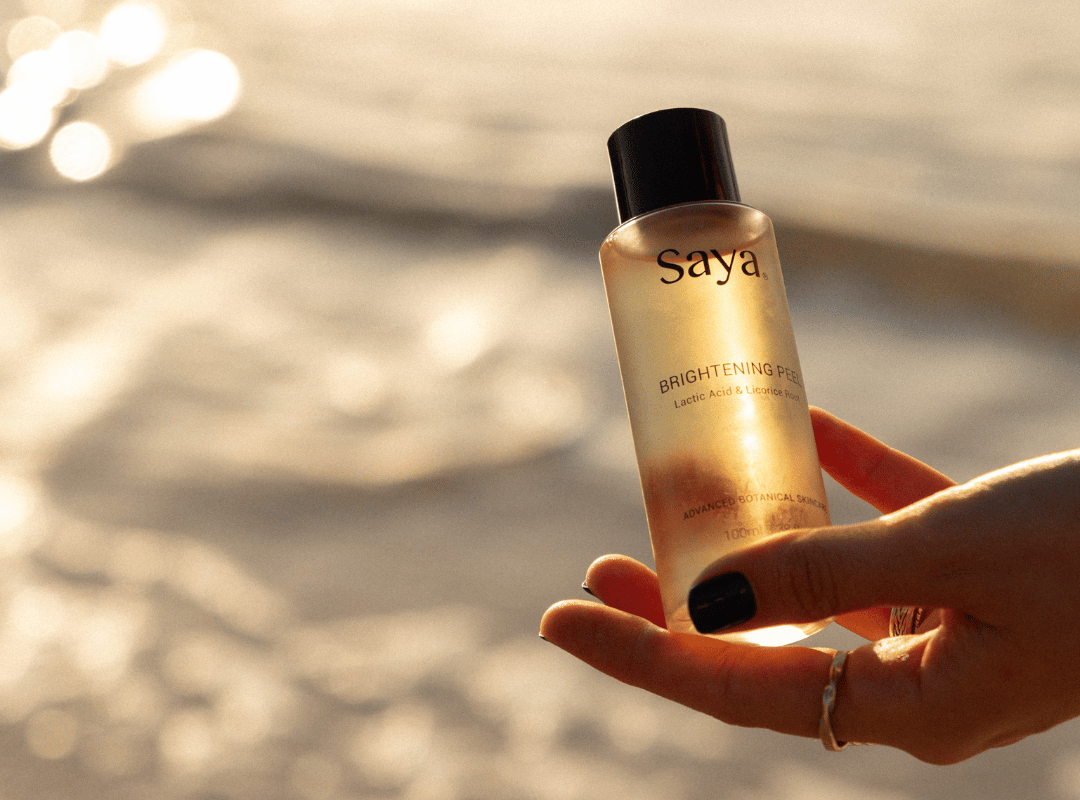
Brightening Peel, Lactic Acid, Kakadu Plum and Licorice Root
Used two to three evenings per week, the Brightening Peel does two things relevant to collagen. Lactic acid accelerates the desquamation that slows with age, clearing the surface for actives applied after and providing a mild fibroblast stimulation through the skin's repair response. Kakadu Plum delivers ascorbic acid, ellagic acid, and gallic acid into freshly exfoliated skin, at the moment when nocturnal permeability is elevated and the surface is most receptive. The MMP-inhibiting activity of the polyphenols is applied precisely when the skin's nightly collagen synthesis window is opening.
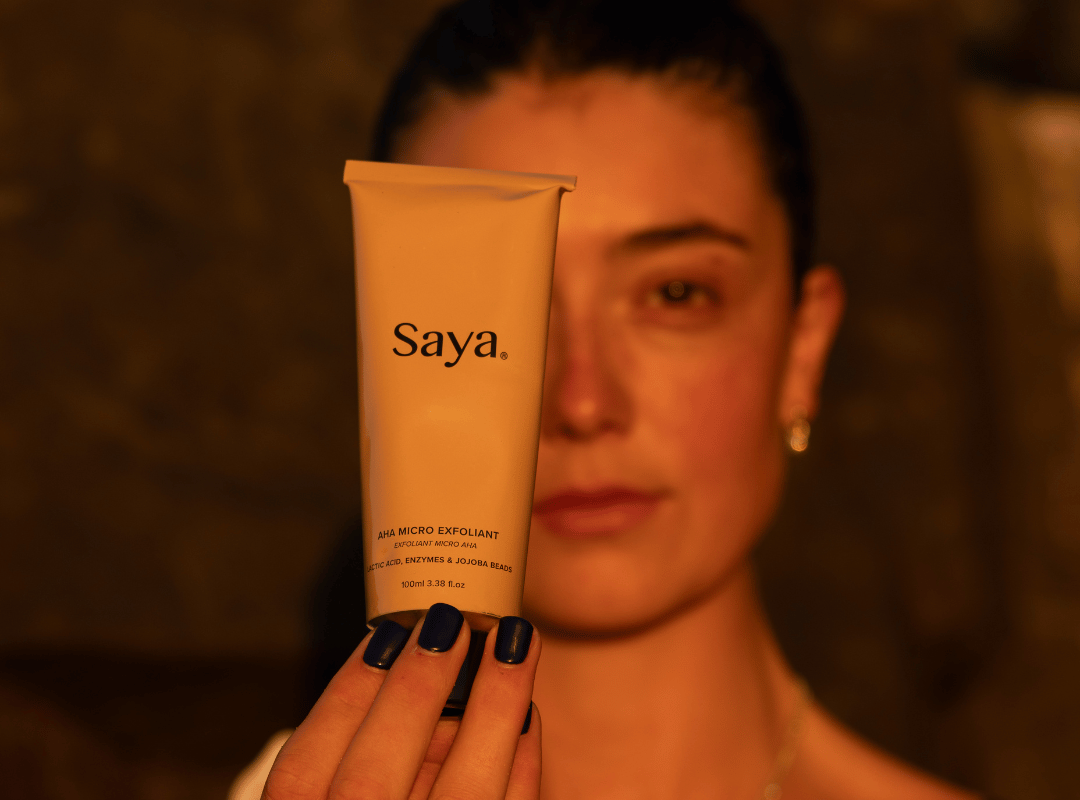
AHA Micro Exfoliant, Lactic Acid, Enzymes and Jojoba Beads
The triple-action exfoliant brings lactic acid, fermented papaya enzymes, and micro-fine jojoba beads together in a formula that resurfacing the skin through chemical, enzymatic, and gentle physical exfoliation simultaneously. Papain and bromelain, the proteolytic enzymes from papaya and pineapple, break down the keratin proteins that hold dead cells together without the irritation that stronger chemical exfoliants can cause. Used two to three times per week in the morning or evening routine, consistent exfoliation with this formula maintains the surface receptivity that allows collagen actives to penetrate and work effectively. Kakadu Plum, Illawarra Plum, and Burdekin Plum contribute ascorbic acid, anthocyanins, ellagic acid, and quercetin, adding antioxidant and MMP-inhibiting activity to every exfoliation session.
Super Serum, Peptide Complex with ChroNOline
The active anchor of the collagen ritual. ChroNOline restores the synchrony of the skin's circadian clock, making the overnight fibroblast activation window more productive. Niacinamide supports ceramide synthesis, manages the inflammatory environment, and reduces transepidermal water loss. Aloe vera's polysaccharides calm the dermal environment and sustain the hydration the collagen synthesis pathway requires. Hyaluronic acid and Pentavitin together build an immediate hydration reservoir and anchor structural moisture to the keratin matrix through the night. Applied before the oil and cream layers, the Super Serum positions all these actives at the interface between the serum and the lipid barrier that will seal them in place.
Renew Serum, Active Botanical Oils
The Renew Serum is the ritual's lipid layer, and it carries more collagen-relevant activity than a supporting role implies. Rosehip oil's trans-retinoic acid provides a low-concentration vitamin A stimulus to fibroblast activity and cell turnover. Macadamia oil's palmitoleic acid replaces sebum lipids the skin is no longer producing in adequate quantities, maintaining the barrier that protects the dermis from inflammatory MMP triggers. Argan oil's tocopherols protect the lipid layer from oxidative degradation overnight, keeping the barrier intact through the hours of collagen synthesis.
Applied with the gua sha tool, the Renew Serum becomes both the glide medium and the active payload delivered more deeply by the massage action. The sequence is: Super Serum to absorb, then Renew Serum as the glide for gua sha, working from the neck upward, following the lymphatic drainage lines, before finishing with the Intense Night Repair.
Intense Moisture, Hyaluronic Acid and Rosehip Oil
For a daytime collagen-supporting ritual, the Intense Moisture provides the moisturiser layer. Rosehip oil contributes trans-retinoic acid and linoleic acid, both relevant to fibroblast activity and barrier integrity. Ceramides reinforce the barrier and reduce the inflammatory load that MMP activity feeds on. Edelweiss extract, rich in leontopodic acids and chlorogenic acid, adds antioxidant protection against the UV and pollution-driven free radical damage that accumulates during the day. Used under SPF, it is the daytime complement to the evening collagen-active ritual.
Intense Night Repair, Bakuchiol and Shea Butter
The Intense Night Repair is where bakuchiol, the retinoid-receptor agonist, does its most significant work. Applied during the midnight to two in the morning peak of cellular division and collagen synthesis, bakuchiol's upregulation of type I, III, and IV collagen and reduction of MMP activity is timed precisely to the skin's most productive repair window. Kakadu Plum provides the ascorbic acid cofactor that collagen hydroxylation requires. Ceramide NP reinforces the barrier's lipid matrix. Shea butter provides the occlusive layer that holds everything in place and reduces the transepidermal water loss that peaks overnight.
The Collagen Ritual
The ritual below is sequenced around the biology of collagen synthesis and protection. Morning focuses on antioxidant defence and barrier support. Evening focuses on active synthesis stimulation during the overnight repair window. Gua sha is incorporated into the evening sequence, where its microcirculatory and mechanotransductive effects compound the activity of the topical ingredients.
Morning
1. Cleansing Balm, double cleanse
Begin with the Cleansing Balm on dry skin. Massage thoroughly, emulsify with water, remove with a warm cloth. Repeat immediately. A clean surface is the foundation of effective active delivery.
2. AHA Micro Exfoliant, 2 to 3 mornings per week
On exfoliation days, apply after cleansing. The lactic acid, enzymes, and jojoba beads resurface the skin and prime it for active absorption. The Kakadu Plum, Illawarra Plum, and Burdekin Plum complex provides antioxidant and MMP-inhibiting activity with every use. Rinse thoroughly and continue with the remaining steps.
3. Super Serum
Apply 2 to 3 drops and press gently into the skin. ChroNOline, niacinamide, and the hydration complex create the active foundation for the day.
Press onto the face and neck. Rosehip oil, ceramides, and edelweiss provide the moisturising, barrier-supporting, and antioxidant protection needed for daytime collagen preservation.
5. SPF
The single most important step in any collagen protection strategy. UV radiation is the primary activator of MMP expression. No collagen-supporting formula will offset daily unprotected sun exposure. Apply a broad-spectrum SPF 50 as the final morning step, every day.
Evening
1. Cleansing Balm, double cleanse
Thoroughly remove the day's accumulation. SPF residue, pollution particulate, and oxidised sebum all activate MMP expression if left in contact with the skin overnight. Two passes with the Cleansing Balm on dry skin is the non-negotiable start to the evening ritual.
2. Brightening Peel, 2 to 3 evenings per week
After cleansing, apply a thin even layer and leave on. Lactic acid clears the surface and initiates a mild fibroblast stimulus. Kakadu Plum delivers its triple-action collagen and antioxidant support into freshly exfoliated skin. Continue with the remaining steps without rinsing.
3. Super Serum
Apply 2 to 3 drops and press into the skin. Allow the peptide complex to absorb before the next layer. ChroNOline is setting the circadian clock for the overnight synthesis window.
4. Renew Serum and Gua Sha
Warm 4 to 5 drops of the Renew Serum in the palms and press onto the skin. While the serum is still present on the surface, take the gua sha tool and work from the neck upward using light, sustained strokes: up the neck, across the jaw, outward along the cheekbones, across the forehead. Follow the lymphatic drainage lines, always moving toward the lymph nodes at the collarbone and in front of the ears. Spend two to three minutes. The rosehip oil in the serum acts as a glide medium, so the stone moves without dragging. The mechanical pressure stimulates fibroblast activity through mechanotransduction, increases microcirculation to the dermis, and drives the serum's actives more deeply into the tissue. This is the most actively stimulating step in the ritual.
Press the overnight cream onto the face, neck, and decolletage as the final step. Bakuchiol activates during the midnight to two in the morning peak of cellular division. Shea butter holds everything in place. Sleep. The biology takes it from here.
Collagen cannot be replaced topically. But it can be supported, protected, and stimulated. The biology of how it works, and how it breaks down, tells you exactly what to do about it.
Twenty years into formulating skincare, collagen is still the structure I come back to most often. Because it is honest. It responds to what you consistently give it, and it reflects what you consistently withhold. The ritual above is not a shortcut. It is a strategy.
Saya McDermott, Founder
sayaskin.com
Read more


Leave a comment
All comments are moderated before being published.
This site is protected by hCaptcha and the hCaptcha Privacy Policy and Terms of Service apply.