

The Inch Below the Jaw That Ages Fastest
The Skin Below Your Face Deserves the Same Attention
There is a moment most of us recognise. You catch yourself in a mirror, in a certain light, and your eye travels down. Past your jawline. To your neck. To the skin that sits across your chest. And you notice things you hadn't quite seen before.
Fine lines that seem to have arrived quietly. A texture that feels different to how it used to. A softening where things once felt firm. Sun damage that has been accumulating, unannounced, for years.
It is a moment that tends to sharpen focus. And while the instinct might be to treat it as something to fix, I think the more useful thing is to understand it and to know that looking after this skin is simpler than you think.
Why the Neck and Décolletage Age the Way They Do
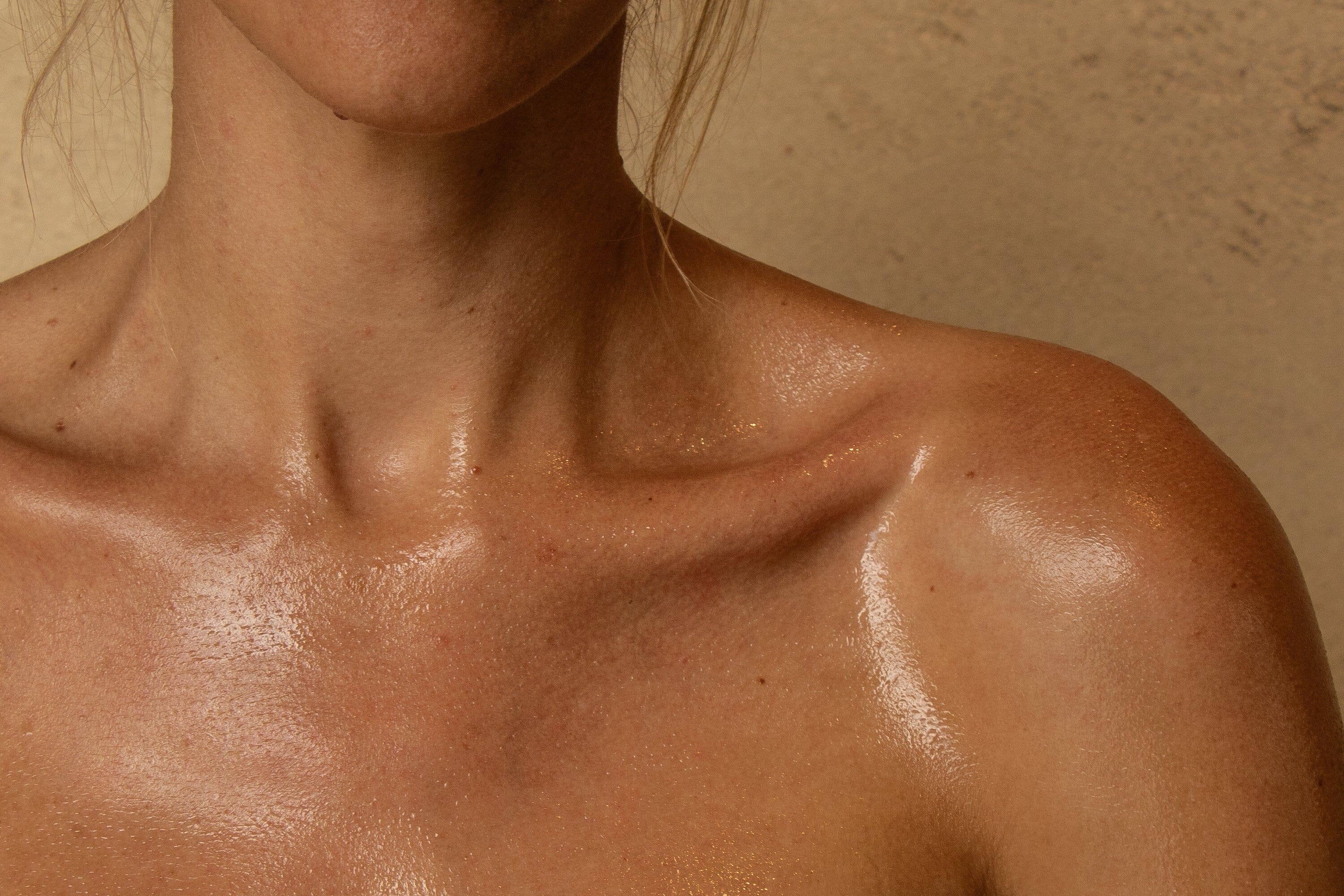
The skin on your neck and chest is structurally different to the skin on your face. It is thinner, produces less sebum, and contains fewer oil glands, which means it has a reduced capacity to retain moisture on its own. It is also less resilient to environmental stressors, which makes the effects of sun exposure, gravity, and time more visible here, often before we expect them.
The décolletage in particular is one of the most chronically sun-exposed areas of the body. Unlike the face, which many of us have been applying SPF to for years, the chest is frequently left unprotected. The cumulative effect of that exposure shows up as uneven pigmentation, sun spots, and a breakdown in the collagen and elastin fibres that keep skin looking smooth and firm.
There is also something specific to the neck that is worth understanding: the way we sleep. Repeatedly pressing the skin against a pillow, night after night, creates what are sometimes called sleep lines, compression creases that gradually become fixed into the skin over time. The neck is particularly vulnerable to this because of the way we turn and settle during sleep, often in the same position for years.
Gravity does the rest. The platysma muscle that runs along the neck loses tone with age, and the skin above it follows.
What You Will Notice
The signs that tend to appear first in this area include:
-
Horizontal neck lines, sometimes called necklace lines, which deepen with age
-
Vertical banding along the neck as muscle tone changes
-
Crepey texture across the throat and chest
-
Sun spots and uneven pigmentation on the décolletage
-
Loss of definition along the jawline where it meets the neck
-
Redness and broken capillaries across the chest from sun damage
-
Dryness and thinning that makes the skin look dull rather than luminous
Most of us only begin paying close attention to these areas once we have started to notice them. That is human. But the most useful thing I can tell you is this: it is never too late to start. Skin responds. It repairs. Given the right support, it will show you that.
The Simplest Shift You Can Make
Your skincare does not stop at your chin. That is really the beginning and the end of it.
Whatever you are already doing for your face, extend it. The same cleanser, the same serum, the same oil, the same SPF and protection with a hat. The neck and décolletage respond to the same active ingredients and the same care, they just rarely receive them. Making this a non-negotiable part of your ritual costs you nothing but a few extra moments, and over time the difference is significant.
Think of these areas as a continuation of your face. They are the canvas that carries everything upward. Treating them as an afterthought is one of the most common and most avoidable oversights in skincare.
The Ingredients Worth Reaching For
When it comes to supporting the neck and décolletage specifically, there are a handful of ingredients I return to again and again.
Bakuchiol is the one I reach for most. A plant-derived retinol alternative, it stimulates collagen production and improves skin elasticity without the sensitivity or downtime that conventional retinoids can cause. It is gentle enough to use on the thinner, more reactive skin of the neck and chest while still delivering real, visible change in texture and firmness over time. It works by encouraging cell turnover, which means fresher, more resilient skin rising to the surface consistently.
Our Renew Facial Serum was built around bakuchiol and is one of the most effective things I know of for this area. Apply it from your face down across your neck and décolletage every morning and evening.
Lactic acid is another essential. A gentle alpha hydroxy acid that exfoliates the surface of the skin, lactic acid improves texture, supports cell renewal, and over time helps to fade areas of uneven pigmentation. It is well tolerated across most skin types, including sensitive skin, and because it also draws moisture into the skin it leaves the surface looking smoother and more even rather than stripped.
Liquorice root works alongside acids beautifully. It is one of the most well-researched natural brightening ingredients available, working to inhibit the excess melanin production that leads to sun spots and uneven tone. For skin that has absorbed years of sun exposure across the chest, liquorice root is quiet and consistent, it fades damage gradually rather than dramatically.
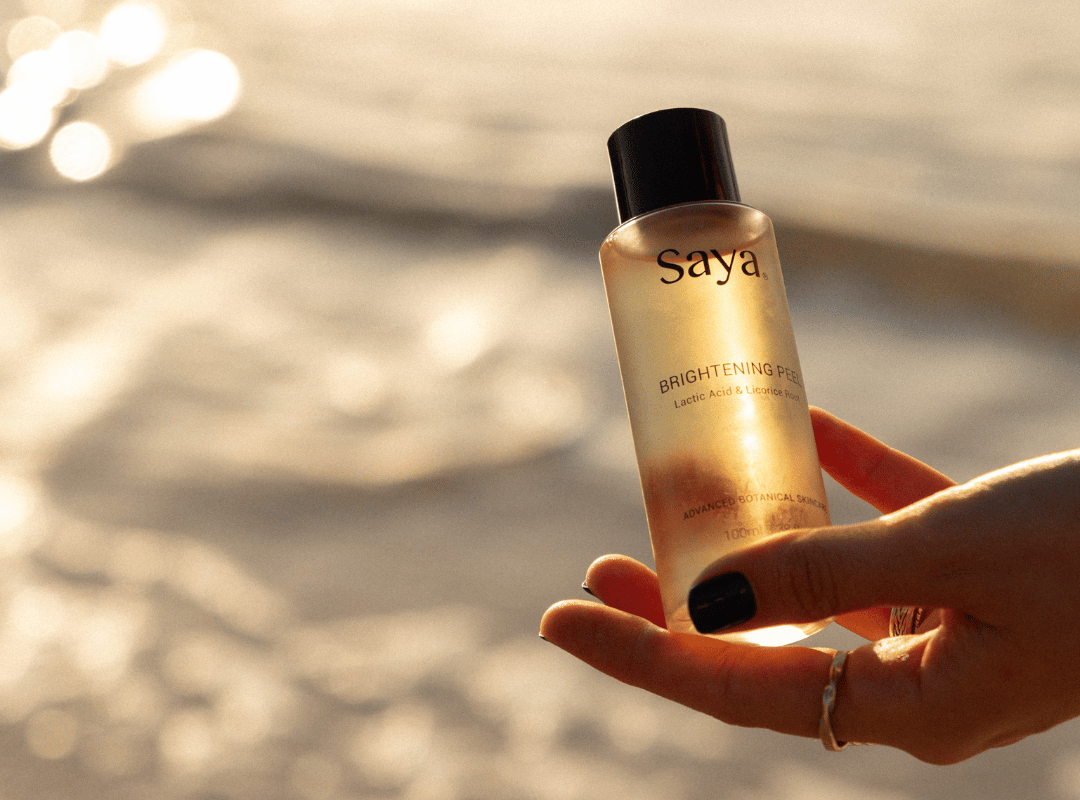
Our Brightening Peel combines lactic acid with liquorice root and works across the face, neck, and décolletage. Used two to three times per week, it will gradually resurface and brighten the skin in all three areas.
Rich plant oils are what I consider the foundation layer for this skin. Because the neck and chest lack the oil production of the face, they benefit enormously from topical lipid support. Look for oils that are high in fatty acids and absorb well rather than sitting heavily on the skin. Argan, rosehip, and marula are all excellent. They restore the skin barrier, improve suppleness, and give the skin the kind of nourishment that translates into visible softness and glow.
The Role of Massage and Gua Sha
One of the most underused tools for the neck and décolletage is also one of the most pleasurable: massage.
The neck holds tension. Most of us carry stress here physically, and that tension has an effect on the skin above and around it. Regular massage increases circulation, encourages lymphatic drainage, and helps to keep the underlying muscle and fascia more supple, which in turn supports the appearance of the skin.
A gua sha tool used along the neck and across the décolletage can be genuinely transformative with consistent use. Work upward and outward, always in the direction of lymphatic flow, using light pressure and a good facial oil as slip. Along the neck, use slow upward strokes. Across the chest, work outward from the sternum toward the shoulders. The results over weeks and months, improved definition, reduced puffiness, a more lifted appearance along the jawline and neck, are among the most visible of any at-home technique.
Make it part of your evening ritual. A few minutes, done well and done consistently, is more valuable than anything more elaborate done rarely.


Leave a comment
All comments are moderated before being published.
This site is protected by hCaptcha and the hCaptcha Privacy Policy and Terms of Service apply.