


Exfoliation at every age
On exfoliation, the quiet work of shedding, and caring for skin at every age.
Skin is never still. Even now, in the quiet, it is making new cells in its depths and releasing old ones at the surface, the way it has done since the day you were born. This is the most natural work skin does, and it asks nothing of us to begin. To exfoliate well is not to interrupt that work. It is to understand its rhythm, to notice the moment it begins to slow, and to offer a considered hand at exactly the right time.
Exfoliation is one of the most misunderstood steps in all of skincare. Too often it is spoken of as scrubbing, stripping, forcing the skin into looking better than it feels. The truth is gentler and far more elegant. Once you understand what is taking place at the surface, exfoliation stops being something done to the skin and becomes something done in partnership with it.
The Science of Shedding
Skin renews itself through a process called desquamation, the natural shedding of dead cells from the surface. Picture the outermost layer, the stratum corneum, as a wall of bricks and mortar. The bricks are corneocytes, flattened cells that have risen up from the living skin below. The mortar is a blend of lipids that holds them together and keeps moisture in.
Each brick is held in place by tiny protein rivets called corneodesmosomes. Before a cell can shed, those rivets must be dissolved, and the skin makes its own enzymes to do precisely that, loosening the bonds so the oldest cells at the very top can release and drift away unnoticed. On healthy skin this happens in a steady, almost invisible exchange. New cells arrive from below at the same pace old ones leave, and the surface stays smooth, soft, and quietly luminous.
Two things this process quietly depends on are worth knowing, because so much rests on them. The first is moisture. Those enzymes only work in a well-hydrated environment, which is why dry skin so often looks dull and flaked. The shedding has simply stalled. The second is balance. When cells arrive and leave in time with one another, light meets the skin evenly and it looks fresh without anything being asked of it. Desquamation, in every sense, is the skin exfoliating itself.
Desquamation is the skin exfoliating itself. Our work is to support that rhythm, never to fight it.
The Slowing Cycle
The full journey of a single cell, from its birth deep in the epidermis to the moment it sheds at the surface, is the cell renewal cycle. In a newborn it takes around fourteen days, which is why a baby's skin looks so impossibly soft. Almost nothing has time to gather before it is replaced.
Through our teens and twenties the cycle settles to roughly twenty-eight days. This is the figure most of us have heard, and it is a useful one, but it was never meant to hold for life. With the years it gently lengthens. By our forties it often reaches forty days or more. By our fifties and beyond it can stretch past sixty. Nothing has gone wrong. This is simply the pace of skin that has lived a little, and there is nothing to fear in it.
What changes at the surface is accumulation. When cells linger longer than they should, they settle unevenly, and light no longer meets the skin cleanly, so the complexion reads as dull and tired rather than radiant. Texture grows rougher underhand. Pigmentation holds more stubbornly, because the cells carrying it are slower to leave. Even the serums and oils you have chosen with care begin to work less well, having to travel through a thicker layer of spent cells before they reach the living skin that can use them.
This is exactly where considered exfoliation finds its purpose. It does not turn the clock back, and it never claims to. It restores the rhythm the skin would keep on its own if it still could, clearing the surface so that radiance, softness, and everything you layer over the skin can return to doing their work.
Why We Exfoliate
Clear the surface, and a great deal follows of its own accord. The spent cells that dulled the complexion lift away, and light finds the skin evenly again, so it looks brighter almost at once. Texture softens. Pores stay clearer, since the very cells that dull the skin are the ones that gather and congest it. And everything that comes after, your serums, your oils, your moisturiser, finally absorbs into living skin rather than resting on a tired surface, so the whole ritual performs as it was designed to.
Given time, gentle exfoliation does something quieter still. It encourages the skin to renew a little more willingly on its own, and the look of uneven tone begins to soften as the cells holding that colour are released. None of this is about stripping the skin or wearing it down. It is about clearing, refining, and inviting the skin back into the cadence it would choose for itself.
The Many Ways Skin Renews
Not all exfoliation works in the same way, and knowing the difference is what lets you choose well for your own skin. There are three paths to it, and the most thoughtful formulations rarely rely on only one.
Physical exfoliation
The most familiar form. A polish or fine bead that lifts away dead cells through gentle movement across the surface. Its gift is immediacy, the smoothness you feel the moment you rinse. Its art is restraint, because anything too coarse, or used too hard, can score the surface and unsettle the barrier. The finest physical exfoliants use smooth, rounded particles that polish rather than scratch.
Chemical exfoliation
In spite of its name, this is often the gentlest and most refined exfoliation of all. These acids dissolve the same protein rivets the skin's own enzymes target, coaxing an even, measured release rather than scrubbing cells away. They come in a few distinct families.
Alpha hydroxy acids are water-soluble and work across the surface. Glycolic acid, the smallest molecule, reaches deepest. Lactic acid is larger, kinder, and hydrating as it works, which makes it one of the most generous and well-tolerated acids there is. The fruit acids found in bilberry, sugar cane, and citrus are gentler again. This family is the natural answer to dullness, dryness, sun damage, uneven tone, and the loss of smoothness that follows a slowing cycle.
Beta hydroxy acids, chiefly salicylic acid, are oil-soluble, which lets them travel into the pore itself and clear congestion from within. They suit oilier, more blemish-prone skin, and bring a natural calm with them.
Polyhydroxy acids, such as gluconolactone, are the largest molecules, and so the slowest and most forgiving. They resurface gradually while drawing in moisture and offering antioxidant comfort, which makes them a quiet ally for sensitive skin that finds stronger acids too much.
Enzymatic exfoliation
Gentlest of all is the work of enzymes. Drawn from fruits such as papaya, pineapple, and mango, these natural proteins digest only the keratin binding dead cells in place, and leave the living skin entirely untouched. It is exfoliation by selection rather than by force, which is why it suits even the most reactive skin, and why it sits so beautifully alongside a mild acid to resurface without ever feeling harsh.
The most intelligent exfoliation rarely leans on a single method. It layers acid, enzyme, and polish so each does only as much as it should, and no more.
Caring for the Face
The skin of the face is finer, more exposed, and more easily provoked than the skin of the body, and it rewards a measured hand. For most of us, most of the time, chemical and enzymatic exfoliation suit it best, even and controlled, with the lightest physical polish kept to a gentle touch.
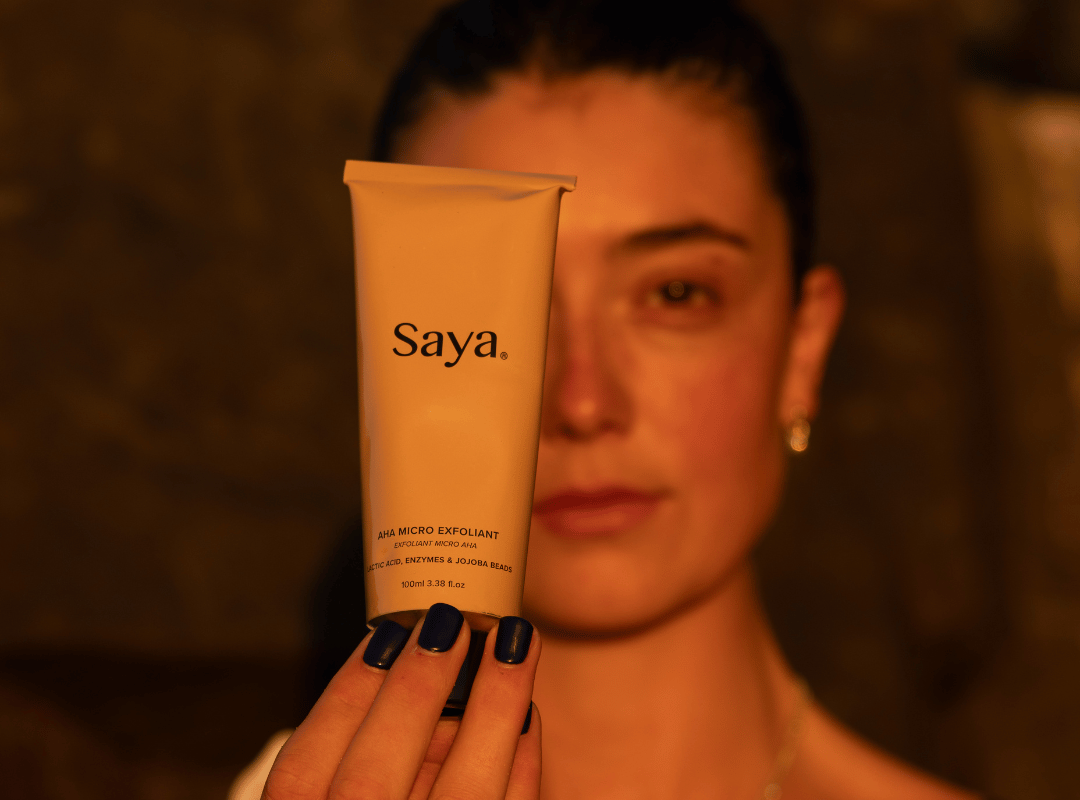
This is the thinking behind our AHA Micro Exfoliant. Rather than choose one method, it brings all three together in a single, unhurried step. Lactic acid and a complex of fruit acids loosen the bonds between dead cells. Fermented papaya, pineapple, and mango enzymes resurface by selection, never irritation. Biodegradable jojoba beads offer the lightest polish, smooth and round so they refine rather than scratch. And native Australian plums, generous in vitamin C, soothe and steady the barrier throughout. Pressed into damp skin two or three times a week, it keeps the renewal cycle moving and the surface clear, and it is gentle enough that we reach for it across every skin type.
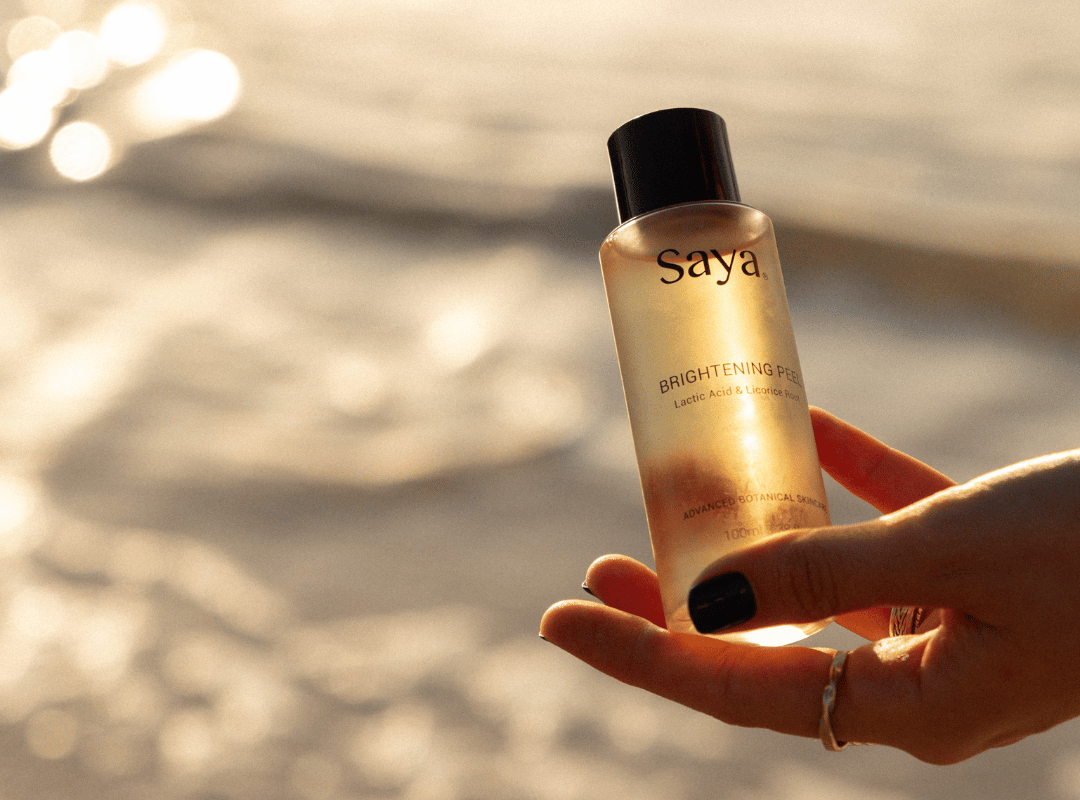
When the skin asks for deeper renewal, the Brightening Peel does its quiet work overnight, while the skin is already turned towards repair. Here lactic acid and a fruit acid complex are joined by azelaic acid to calm and even the tone, and by gluconolactone, the gentle polyhydroxy acid that resurfaces slowly while holding moisture in place. Kakadu Plum and native Australian limes brighten, licorice root softens the look of pigmentation, and hyaluronic acid sees the skin wake hydrated rather than tight. Smoothed on as a thin veil before bed and rinsed away in the morning, it answers dullness, congestion, and uneven tone while you sleep. Because it carries alpha hydroxy acids, daily sun protection is its constant companion.
Caring for the Body
The body asks for something a little different. Its skin is thicker and more robust than the face, yet it is also drier, less attended to, and quicker to gather the rough, dull patches that come of slowed shedding, across the upper arms, the thighs, anywhere that meets friction. Body skin welcomes a more generous polish than the face would ever want.
Our Coconut Body Polish is made for this moment. It is best applied to dry skin, before any water, when the polish can work most effectively against the surface. As a little water is introduced, it transforms beneath the hands into a soft cream that rinses away clean, leaving skin smooth and nourished in one gesture rather than scrubbed and stripped. Two or three times a week is ample. What follows needs very little, though it loves a body oil sealed in over still-damp skin.
There is a quieter way to keep the body in rhythm between polishes. A small amount of the Brightening Peel stirred through your body moisturiser brings gentle, ongoing renewal to larger areas, keeping tone even and texture smooth with no abrasion at all. It is a favourite of mine for holding pigmentation at bay on sun-touched skin through the warmer months.
Through the Ages
Skin is fragile at both ends of a life, not in maturity alone, and this is the thing most worth holding onto. The error of youth is to over-exfoliate skin that is renewing perfectly well without help. The error of later years is to treat increasingly delicate skin as though it were still twenty. At every age the intention is the same: to meet the skin at the rhythm it is keeping now.
Teens and the early twenties
Young skin renews quickly, often on a cycle near twenty-one to twenty-eight days, which is the source of its natural luminosity. The difficulty here is seldom a slow cycle. It is oil, congestion, and the hormonal shifts that bring breakouts. The temptation is to scrub hard and often, but vigorous exfoliation on skin that is already renewing well only wears down the barrier and provokes more oil and irritation in answer. Young skin is more fragile than it appears. The AHA Micro Exfoliant two or three times a week is all this age asks of exfoliation: enough to keep the surface clear and congestion at bay, never so much that it unsettles a barrier doing its job.
The late twenties and thirties
This is when the cycle quietly begins to lengthen, and the first signs are subtle ones: skin a little less bright by evening, a texture no longer effortlessly smooth, the earliest marks of sun beginning to linger. It is the moment to make gentle chemical exfoliation a steady habit rather than an occasional rescue. The AHA Micro Exfoliant stays the foundation, and this is a natural age to welcome the Brightening Peel once or twice a week, especially where early pigmentation or city living has begun to show.
The forties
By now the cycle has slowed in earnest, often to forty days or beyond, and the effects are easier to read. Skin can look duller and drier, texture rougher, pigmentation more settled, since the cells carrying it are slower to go. Exfoliation comes into its own here, though the emphasis turns towards the gentler, hydrating acids. Lactic acid, which softens and resurfaces while drawing in moisture, suits this skin beautifully. The AHA Micro Exfoliant keeps the surface refined, while the Brightening Peel becomes a true ally for tone and radiance, working overnight without disturbing the day. The principle is consistency over intensity, regular and gentle clearing, always closed with hydration.
The fifties and menopause
Around menopause, with oestrogen in retreat, the skin grows thinner, drier, and slower to repair, and the cycle can stretch past sixty days. This is not a moment to exfoliate harder in compensation. The opposite is true. More delicate skin asks for the gentlest method that works, and a little more room between treatments. Lactic acid and the polyhydroxy gluconolactone are well suited here, each resurfacing while it supports moisture. The Brightening Peel is especially considered for this stage, its acids met by hyaluronic acid and Pentavitin so the skin is renewed and replenished in the same breath. Ease the frequency back, and follow every exfoliating step with rich, restorative care.
Sixty and beyond
In the later years the skin is at its most delicate, finer and slower to recover from anything that disturbs it. The word to keep close is kindness. Gentle enzymatic and lactic exfoliation, used less often and always with care, keeps the complexion clear and helps the skin make the most of all that is layered over it. There is no place for strong acids or any brisk polishing. A light hand, generous moisture, and patience reward this skin most of all. Radiance here is not forced from the skin. It is uncovered, gently, and the skin is fed well in return.
Skin is fragile at both ends of a life. The art was never about doing more. It is about doing exactly enough.
Into the Ritual
Exfoliation belongs in every routine. The only questions are which method, and how often. Its place is the same whatever the age: on clean, damp skin, after cleansing and misting, before the serums and the moisturiser, so that all which follows settles into a freshly cleared surface.
For the face, the AHA Micro Exfoliant two or three times a week is the dependable foundation across every skin type and every stage of life. The Brightening Peel sits beside it as an overnight treatment, once to three times a week as the skin allows, eased back on more sensitive or mature skin and built up slowly. With either, daily sun protection is not a suggestion but a part of the same care. Freshly cleared skin receives everything more readily, sunlight included, and so it is shielded as a matter of course.
For the body, the Coconut Body Polish two or three times a week in the shower keeps the skin smooth and bright, applied to dry skin first for the truest result. Between polishes, a little Brightening Peel through the body moisturiser holds the rhythm across the areas that need it most. And always, face or body, exfoliated skin is sealed with moisture, for clearing the surface and then replenishing it is what turns exfoliation from a stripping into a kindness.
I have spent more than twenty years formulating with native Australian botanicals, and the longer I do it, the more I trust the skin's own intelligence. Exfoliation, done with knowledge and a light hand, is simply how we keep faith with it. It was never about chasing a younger face. It is about working in quiet partnership with a rhythm the skin has kept since your very first day, and lending a hand precisely when, and only when, it asks. Do that, and the skin returns the favour, at every age.
Saya McDermott, Founder
Read more

Leave a comment
All comments are moderated before being published.
This site is protected by hCaptcha and the hCaptcha Privacy Policy and Terms of Service apply.