


Seasons of skincare - moving into the cooler air
What the shift into autumn and winter means for your skin, and the ritual worth building around it. There is a particular quality to the air when the seasons begin to turn. A sharpness in the morning that was not there a week ago. A stillness in the light. The days grow shorter almost imperceptibly at first, and then, quite suddenly, it is unmistakable. Autumn is here. For most of us this shift brings a change in wardrobe, in food, in the pace of things. What we are slower to consider is what it means for our skin. And yet the skin is perhaps the organ most immediately, most visibly affected by the turning of the year. This is a piece about that shift. The science behind it, the ingredients that respond to it, and the considered adjustments to your ritual that will carry your skin through the cooler months in better condition than it entered them.
The Science of Seasons
The earth's axial tilt, roughly 23.5 degrees, is responsible for everything. As the Southern Hemisphere tilts away from the sun through autumn and into winter, solar radiation strikes at a lower angle, spreading the same energy across a greater surface area. The result is less warmth, less UV, shorter days. But the seasonal shift is not only about temperature. It is about the entire character of the atmosphere. As air cools, it holds less moisture. Relative humidity drops. The crisp, dry quality of a winter morning is not imagined. It is measurable. In many parts of Australia, outdoor humidity can fall by 20 to 30 percent between summer and the depths of winter. And then, inside, we turn on the heating. Central heating systems draw moisture from the air, creating indoor environments that the skin reads as arid. Your skin exists at the intersection of all of this. It is a living, responsive organ, and it registers every shift in its environment. The cooler months are not a threat to it. But they do ask for something more considered.
What the Cool, Dry Air Does to Your Skin
The outermost layer of the skin, the stratum corneum, functions as a barrier. It keeps moisture in and environmental aggressors out. Its ability to do this depends on two things: a healthy lipid matrix and adequate hydration. Both are directly affected by the seasons. When the air loses humidity it draws moisture from wherever it can find it, including the surface of the skin. This process, transepidermal water loss, accelerates in dry, cool conditions. The skin begins to feel tight. Fine lines appear more pronounced. The complexion can look duller, less even. These are not simply cosmetic concerns. They are signals from the barrier that it is working harder than usual to hold its ground. The cold itself also affects the skin's capacity to produce the natural oils that support the lipid matrix. Sebaceous glands slow in response to lower temperatures, reducing the skin's own supply of the lipids it needs. Less moisture retained, fewer oils produced. The skin becomes more in need of support at exactly the moment that the environment is offering the least.
Your skin is not fragile. It is responsive. The ritual you build around it in these months is an act of care that it will reflect back to you.
Those with naturally drier skin feel this most acutely. But oily and combination skin types notice the shift too. The reactive oiliness that appears in summer, a response to heat and humidity, settles in the cooler months. What remains can feel less familiar, less protected, and quietly in need of something richer.
The Ingredients to Reach For
Knowing what the cooler months ask of the skin makes it easier to know what to reach for. The priorities are barrier support, sustained hydration, and consistent cell function. The following ingredients address each of these, and several do all three.
Fatty Acids and Linoleic Acid
The skin's lipid barrier is largely composed of fatty acids, ceramides, and cholesterol. When environmental stress depletes this barrier, the most direct way to support it is to replenish these compounds from the outside. This is where oils become genuinely essential in winter, not as an indulgence, but as a functional part of the routine.
Linoleic acid, an omega-6 fatty acid, is one of the most important. The skin cannot synthesise it on its own and so must receive it from external sources. It is a key structural component of ceramides and plays a critical role in maintaining barrier integrity. Oils rich in linoleic acid include rosehip, argan, and macadamia, each bringing additional properties alongside. Rosehip oil is a natural source of trans-retinoic acid, a form of vitamin A, which supports cell turnover and skin renewal. It is a gentle but genuinely active addition to the winter ritual. Our Renew Face Oil is built around this principle, drawing on rosehip alongside a considered blend of botanical oils to support the barrier where the cooler months deplete it most. Argan oil, rich in both oleic and linoleic acid, brings exceptional emolliency. It absorbs without heaviness and leaves a luminous quality in the skin. We use it in both our Renew Face Oil and Argan Body Oil for exactly this reason. It works as well on the body as it does on the face. Macadamia oil is high in palmitoleic acid, a fatty acid that closely mirrors the composition of the skin's own sebum, making it particularly well suited to drier or more mature skin. Avocado oil, with its deep oleic acid content, is one of the richest available and excellent for barrier repair in the coldest months. Both appear in our Intense Moisture and Intense Night Repair formulations, where the priority is deep nourishment and lasting comfort through winter nights. Shea butter, technically a fat rather than an oil, deserves mention alongside them. Rich in oleic acid, stearic acid, and triterpenes with anti-inflammatory properties, it forms a protective layer that slows moisture loss while delivering genuine nourishment to the tissue beneath. It is a cornerstone of our Rich Body Cream.
Vitamin C and Kakadu Plum
Vitamin C is one of the most well-researched antioxidants in skincare. It supports collagen production, neutralises free radical damage, and works to even skin tone. In the cooler months, when UV levels are lower and antioxidant protection can feel less urgent, it remains as relevant as ever. Collagen synthesis does not pause for winter. Kakadu Plum is a native Australian botanical and the world's richest known plant source of vitamin C, containing up to 100 times more ascorbic acid per gram than an orange. The vitamin C it delivers is stabilised within a complex botanical matrix, making it more bioavailable and more stable than many synthetic forms. It is one of the hero ingredients in our Super Serum, where it works alongside hyaluronic acid and bakuchiol to support brightness and structural integrity through every season.
Ceramides
Ceramides are lipid molecules that make up approximately 50 percent of the skin's outermost layer. They act as the binding structure between skin cells, holding the barrier together and preventing moisture from escaping. When ceramide levels are depleted, whether through age, environmental stress, or over-cleansing, the barrier is compromised and the skin loses its ability to retain hydration. Replenishing ceramides topically has been shown to measurably improve barrier function. In autumn and winter, when both environmental pressure and the skin's own production slow, ceramide-rich formulations become a meaningful part of a considered routine. Our Intense Moisture and Intense Night Repair are both formulated with this in mind, providing the barrier reinforcement that winter skin needs at each point in the day.
Bakuchiol
Bakuchiol is a plant-derived compound extracted from the seeds of Psoralea corylifolia. It supports cell turnover, collagen production, and skin texture through pathways similar to retinol, without the sensitivity or photoreactivity that conventional vitamin A derivatives can introduce. This makes it particularly well suited to the cooler months. When the skin is already navigating environmental change, bakuchiol allows you to maintain the renewal and structural benefits of a retinol-equivalent without adding irritation to a barrier that is already working. It features in our Renew Face Oil, where it works alongside rosehip and a blend of botanical lipids to support the skin's structure without compromise.
You do not need to rebuild your routine from the ground up. What you need is to read what your skin is asking for, and meet it there.
Transitioning Your Ritual
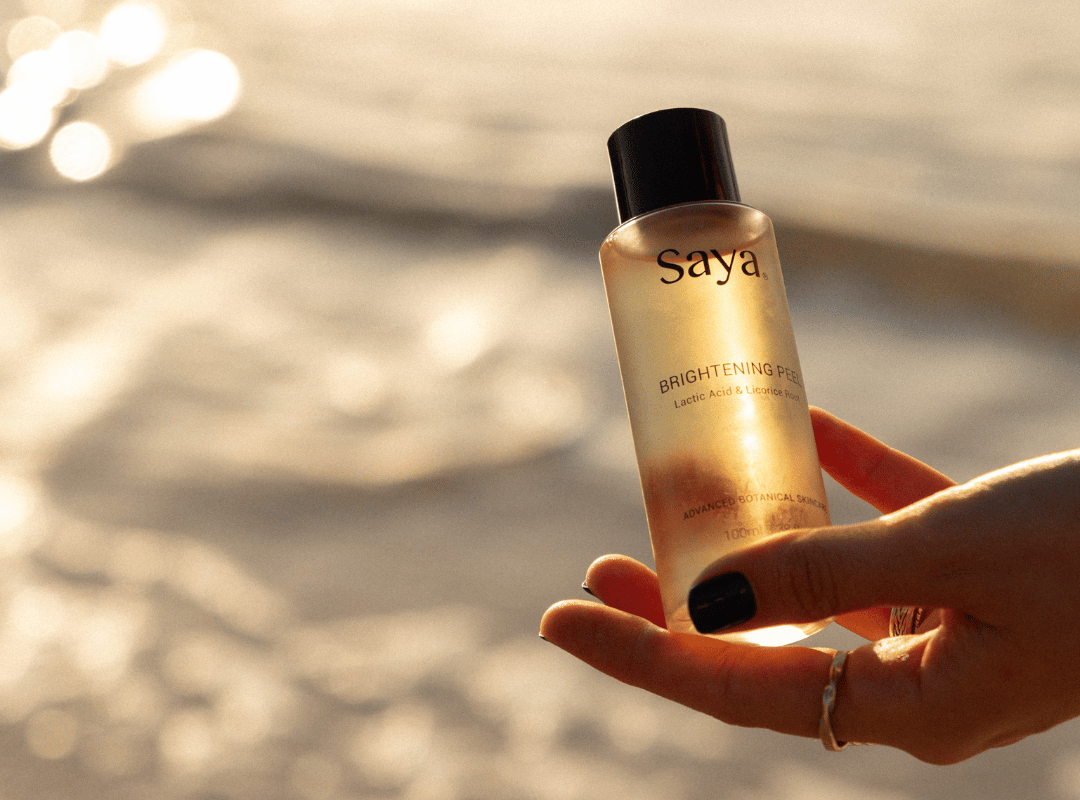
Seasonal transition in skincare is not about starting again. It is about adding depth, richness, and a little more intention to what you already have. The routine that served you through summer needs adjusting, not replacing. The most impactful single change is the cleanser. In the warmer months, a cleansing gel works well. It removes without heaviness and leaves the skin feeling fresh. In the cooler months, that same freshness can tip into tightness. Cleansing in the morning, when the skin has spent hours drying in heated air, can strip the barrier of oils it cannot easily replenish at that time of year. Our Cleansing Balm changes the experience entirely. It dissolves impurities and residue while actively contributing lipids back to the skin through its nourishing oil blend. The rinse leaves the skin feeling clean and comfortable rather than stripped. This single swap tends to be the most immediately noticeable improvement in how winter skin feels from one day to the next. For those who want to keep their moisturiser unchanged, adding two to three drops of the Renew Face Oil before application is a straightforward way to add depth without disruption. Warmed in the palms and blended with your usual moisturiser, it enriches the formulation and deepens its moisture-retaining effect without adding another step to the routine. Exfoliation becomes more, not less, important in winter. The instinct to reduce it when the skin feels sensitive or dry is understandable, but slowing cell turnover allows a buildup at the surface that dulls the complexion and blocks the absorption of everything applied on top. Our Brightening Peel keeps the surface clear and the cycle active, gently enough for consistent winter use and effective enough to make a visible difference to tone and radiance within weeks.
The Body, Beyond an Afterthought
The face receives most of our attention and most of our product investment. The body is often left to manage with whatever is close at hand. In winter, this shows. The same conditions that affect the face, dry air, indoor heating, reduced sebum production, affect the skin of the body too. The legs are particularly prone to a dull, scaled appearance in winter. The shins and lower limbs have fewer sebaceous glands than other areas and lose moisture quickly. The upper arms, décolletage, and hands are often similarly neglected. Attending to the body in winter is not indulgence. It is simply maintenance. And it does not require a complicated routine. Exfoliation is the foundation. Adding a small amount of our Brightening Peel to your daily body moisturiser maintains gentle cell turnover without a separate step. The AHA content keeps the surface smooth and receptive, and the effect on radiance is noticeable within a week of consistent use. The Coconut Body Polish exfoliates and nourishes at the same time. The coconut oil base works alongside the polish rather than in spite of it, meaning you step out of the shower with skin that is already soft and does not immediately need something further applied. The Saya tip for winter body skin: add a few drops of our Argan Body Oil to your daily body moisturiser before application. It does not replace the moisturiser. It extends it. The oil adds a layer of lipid nourishment that moisturiser alone cannot replicate, sealing moisture in and giving the skin a dewy, luminous quality that persists well into the day.
The Autumn Winter Ritual
A considered sequence for the cooler months, for face and body.
The Face
01. Cleansing Balm
Massage into dry skin with slow, upward strokes, working the oil blend across the surface and into the pores. Add a little warm water to emulsify and rinse. The skin should feel clean and completely comfortable. Nothing tight, nothing compensating. Use morning and evening through the cooler months.
02. Brightening Peel
Two to three times a week, apply to damp skin after cleansing and allow to work before continuing. The AHA complex keeps cell turnover active, clears the surface buildup that dulls winter skin, and ensures that everything applied on top actually absorbs. Exfoliation in winter is not optional. The skin needs it more than it does in summer.
03. Renew Face Oil
Warm three to four drops between the palms and press gently into the skin. Use alone as a treatment layer, or blend with the Intense Moisture for added richness. In winter, both approaches work well. The oil delivers botanical lipids and supports the barrier at a depth that moisturiser alone does not reach. Use morning and evening.
04. Intense Moisture
Apply in upward strokes across the face, neck, and décolletage. If the Renew Face Oil has been applied first, follow while the skin is still slightly warm from the oil. The two layers work together, the oil nourishes beneath, the moisturiser seals and hydrates at the surface.
In the evening, replace the Intense Moisture with the Intense Night Repair. Richer in texture and formulated to support the skin's overnight repair processes, it works with the natural cycle of renewal that is most active between midnight and the early hours. Apply after the Renew Face Oil and allow to absorb fully before sleep.
The Body
01. Body Wash
Begin in the shower with the Body Wash. The formulation produces a generous, enveloping foam that cleanses thoroughly without stripping. The botanical fragrance settles quietly on the skin and stays after rinsing. A ritual in itself.
Two to three times a week, follow the Body Wash with the Coconut Body Polish on damp skin. Work in circular motions from the ankles upward. The coconut oil base nourishes as the polish exfoliates. You step out of the shower with skin that is already soft and already beginning to glow.
03. Argan Body Oil
While the skin is still slightly damp, add a few drops of Argan Body Oil to your body moisturiser to increase nourishment and add radiance. The oil seals moisture in and gives the skin a dewy, luminous quality that moisturiser alone does not deliver. Apply with long, sweeping strokes and allow a moment before dressing.
04. Rich Body Cream
Finish with the Rich Body Cream, applied generously where the skin needs it most: lower legs, elbows, hands, décolletage. Layered over the Argan Body Oil, the cream deepens the moisture and extends it through the day.
A note from Saya
The seasons are one of the few certainties in skincare. They come for all of us, in the same order, every year. What changes is whether we meet them with intention or let them take us by surprise. I hope this piece gives you the understanding to make the shift with ease. Your skin will feel the difference.


Leave a comment
All comments are moderated before being published.
This site is protected by hCaptcha and the hCaptcha Privacy Policy and Terms of Service apply.