

The Overnight Shift
What your skin is actually doing while you sleep, the science behind it, and how to give it exactly what it needs. I have been formulating skincare for over twenty years, and nothing I have learned has changed my own evening ritual more fundamentally than understanding what the skin does at night. Not in a vague, general sense, but specifically. The cellular processes, the enzyme activity, the permeability windows. Once you understand it at that level, the evening routine stops feeling like maintenance and starts feeling like participation. This is what I want to share here: the biology, the chemistry, and the ritual that brings it all together.
The Skin Has Its Own Clock
The skin operates on a circadian rhythm, a 24-hour biological cycle that is as real and measurable as your sleep-wake cycle. During daylight hours, the skin is in defensive mode. The barrier tightens, oil production rises, and cellular energy is directed toward shielding against UV radiation, environmental pollutants, and oxidative stress. As evening arrives and cortisol levels begin to fall, the skin shifts orientation entirely. Blood flow to the skin increases. Core body temperature drops, drawing warmth toward the surface. The skin becomes measurably more permeable: active ingredients applied at night can penetrate the epidermis more deeply than those applied in the morning, which means the products you choose for your evening routine are doing more work than their daytime equivalents. Cell division, the process of mitosis by which new skin cells are generated, peaks between midnight and two in the morning. Growth hormone released during deep sleep directly amplifies this process. The enzymes responsible for DNA repair are most active during these hours. Collagen synthesis rates are elevated. The skin is not resting. It is working.
What Is Actually Happening
Cell Turnover
Keratinocytes, the cells that form the outermost layers of the skin, are constantly generated in the basal layer of the epidermis and travel upward over a cycle of approximately 28 days. This process slows significantly with age. By the mid-thirties, the cycle has extended noticeably. By the fifties, it can take up to 45 days or longer. The result is the accumulation of dead cells on the surface that creates dullness, uneven texture, and reduced luminosity. At night, when the skin's energy is not being spent on UV defence, the rate of cellular regeneration accelerates. Supporting this acceleration with the right topical ingredients is one of the most direct interventions available in skincare.
Collagen and Elastin Synthesis
Fibroblasts, the dermal cells responsible for producing collagen and elastin, are significantly more active at night. Collagen synthesis requires a specific sequence: fibroblasts produce procollagen, which is then cleaved and assembled into fibrils. This process is enzyme-dependent and requires vitamin C as a direct cofactor. Without adequate ascorbic acid present in the dermis, the hydroxylation of proline and lysine, the critical step in collagen stability, cannot proceed correctly. Vitamin C applied in the evening is not redundant. It is strategically placed precisely where the skin's chemistry needs it most.
Barrier Restoration
Transepidermal water loss, the passive evaporation of moisture through the skin surface, increases at night. The body's core temperature drop creates a thermal gradient that draws moisture outward. Without adequate barrier support, skin can wake measurably more dehydrated than when it went to sleep. The skin's lamellar bodies, the structures that release lipid bilayers into the intercellular space to form the barrier, are also more active at night. This makes the evening the optimal window for delivering the fatty acids and lipids the barrier needs to rebuild.
Hydration and Permeability
The elevated permeability of the skin at night works in both directions. It means active ingredients absorb more deeply. It also means hydration escapes more readily. This is why the evening ritual requires both actives and a strong humectant and occlusive foundation. Aloe vera, hyaluronic acid, and Pentavitin each play distinct and complementary roles in managing this balance, drawing moisture in and anchoring it to the skin's structure throughout the night.
Melatonin and Antioxidant Activity
Melatonin, produced by the pineal gland in response to darkness, is also synthesised directly by skin cells. It acts as a local antioxidant, scavenging free radicals and protecting mitochondrial DNA from the oxidative damage accumulated during the day. Supporting this process topically, with antioxidant-rich plant extracts applied in the evening, layers additional protection onto a process the skin is already running independently.
The Compounds That Matter Most
Understanding which ingredients support overnight repair requires going one level deeper than the ingredient itself. The compounds within an ingredient are what drive the biological activity.
Ascorbic Acid
Vitamin C is required for two of the most critical steps in collagen synthesis: the hydroxylation of proline into hydroxyproline, and the hydroxylation of lysine into hydroxylysine. Without these conversions, procollagen chains cannot form the stable triple-helix structure that gives collagen its tensile strength. Applied in the evening, ascorbic acid works alongside the fibroblast activity already elevated by the skin's circadian rhythm. Vitamin C also inhibits tyrosinase, the enzyme responsible for melanin overproduction. This addresses hyperpigmentation at its biochemical root rather than at the surface. Over consistent use, this results in a measurable shift in evenness and luminosity. Beyond ascorbic acid itself, the most potent natural source of vitamin C known to science also carries two further compounds of significant relevance: ellagic acid and gallic acid. These polyphenols independently inhibit tyrosinase and scavenge reactive oxygen species, providing a layered brightening and antioxidant mechanism that no synthetic vitamin C formulation can replicate.
Bakuchiol
Bakuchiol is a meroterpene phenol derived from the seeds and leaves of Psoralea corylifolia. Unlike most plant-derived ingredients that work through antioxidant or humectant pathways, bakuchiol operates via retinoid receptors in the skin. It upregulates the expression of type I, III, and IV collagen, reduces matrix metalloproteinase activity (the enzymes that break down existing collagen and elastin), and increases cell turnover through the same receptor pathways as retinoic acid, but without the associated irritation, photosensitivity, or barrier disruption. This matters enormously in an evening formula. All the benefits of retinoid receptor activation, none of the requirement to manage sensitivity or avoid sun exposure. Applied during the skin's peak division window, bakuchiol is working at precisely the right moment.
Signal Peptides and Chrono-Ageing
Peptides are short chains of amino acids that function as chemical messengers between cells. Signal peptides specifically communicate with fibroblasts to upregulate collagen, elastin, and hyaluronic acid production. The tetrapeptide ChroNOline targets what is known as chrono-ageing: the cumulative loss of synchrony in the skin's circadian clock that contributes to the visual signs of fatigue and biological ageing over time. The skin's circadian clock governs not just when repair happens, but how efficiently it happens. As this internal synchrony degrades with age and accumulated stress, the overnight repair window becomes less productive. ChroNOline works to restore that synchrony. Applied at night, it is supporting the mechanism that makes everything else in the evening ritual more effective.
Fatty Acids: Oleic, Linoleic, and Palmitoleic Acid
The skin's intercellular lipid matrix, the mortar between the brick-like cells of the stratum corneum, is composed of ceramides, cholesterol, and free fatty acids. Linoleic acid is an essential fatty acid the skin cannot synthesise independently. Deficiency contributes directly to barrier compromise, rough texture, and sensitivity. Oleic acid is deeply emollient and enhances the penetration of other active compounds. Palmitoleic acid, present in macadamia oil at concentrations that closely mirror young skin sebum, has a particular affinity with the skin's own lipid chemistry and is especially effective at restoring suppleness in skin that has aged past its natural sebum production levels.
Rosehip oil, rich in linoleic acid and trans-retinoic acid, adds a further dimension: a natural source of vitamin A derivatives that support cell turnover without the concentration that causes sensitivity. Shea butter contributes oleic acid, stearic acid, and triterpene alcohols, which have documented anti-inflammatory activity and a specific ability to support the skin's natural wound-healing response. Argan oil provides oleic acid, linoleic acid, and a notable concentration of tocopherols, the vitamin E family, which protect the skin's lipid layer from oxidative degradation overnight.
Humectants: Aloe Vera, Hyaluronic Acid, and Pentavitin
These three work through distinct but complementary mechanisms. Hyaluronic acid binds water molecules to itself in the upper layers of the skin, creating an immediate hydration reservoir that plumps the appearance of fine lines. Aloe vera provides polysaccharides that soothe and calm the dermal environment, reduce inflammation that disrupts the repair process, and deliver a sustained hydrating effect through their film-forming properties.
Pentavitin operates differently. It is a carbohydrate complex derived from wheat that binds directly to keratin proteins in the skin, creating a moisture anchor that does not wash off or evaporate. Where hyaluronic acid holds water, Pentavitin holds the skin's capacity to hold water. Used together, these three compounds address overnight dehydration at every level: immediate surface hydration, deeper moisture retention, and structural anchoring.
Australian Botanicals Carrying These Compounds
Many of the most potent overnight-relevant compounds are present in concentrated form in native Australian botanicals, plants that have adapted over thousands of years to conditions, UV intensity, temperature extremes, oxidative stress, that demanded an extraordinary level of biochemical resilience. That resilience translates directly into skin benefit.
Kakadu Plum (Terminalia ferdinandiana) carries the highest recorded concentration of natural vitamin C of any fruit on earth, up to 100 times the ascorbic acid content of an orange. It also contains ellagic acid, gallic acid, and punicalagin, making it one of the most comprehensively active brightening and antioxidant botanicals in existence. Its inclusion in an evening formula covers collagen support, tyrosinase inhibition, and free radical scavenging in a single ingredient.
Macadamia Oil (Macadamia integrifolia) has a fatty acid profile that closely mirrors the lipid composition of young, healthy skin sebum. Its high palmitoleic acid content gives it an exceptional ability to restore barrier function, and its squalene levels provide additional antioxidant and emollient activity. It absorbs readily and leaves no residue, making it ideal as both an active lipid and a carrier for other ingredients.
Rosehip Oil (Rosa canina) is one of the most studied plant oils for skin regeneration. Its linoleic acid content supports the lamellar structure of the barrier, and its naturally occurring trans-retinoic acid contributes cell turnover activity. It is particularly effective for skin that is showing the early to mid signs of photo-ageing.
Illawarra Plum (Podocarpus elatus) is rich in anthocyanins and ellagitannins, compounds that neutralise free radicals and support the skin's overnight antioxidant activity.
Burdekin Plum (Pleiogynium timorense) provides ellagic acid, quercetin, and tannin compounds with documented anti-inflammatory and skin-firming activity.
The Products That Bring It Together
Each of the following formulas was built with nocturnal skin biology in mind. The products are sequenced intentionally.
Cleansing Balm — Macadamia and Chamomile
The evening ritual begins not with actives but with removal. A proper first cleanse dissolves the accumulation of the day: SPF residue, urban pollution particles, sebum oxidised by UV exposure. These are not minor inconveniences. Oxidised squalene from urban pollution is a documented trigger of barrier disruption and congestion. SPF left on skin overnight creates a film that prevents the absorption of everything applied on top of it. The Cleansing Balm melts on contact with skin, transforming to a light milk on emulsification. The macadamia oil base dissolves oil-based impurities through like-dissolves-like chemistry while simultaneously delivering palmitoleic acid to the barrier. Chamomile calms any residual inflammation from sun or environmental exposure. Skin should emerge clean and settled, not stripped. The barrier is about to do its most important work of the day.
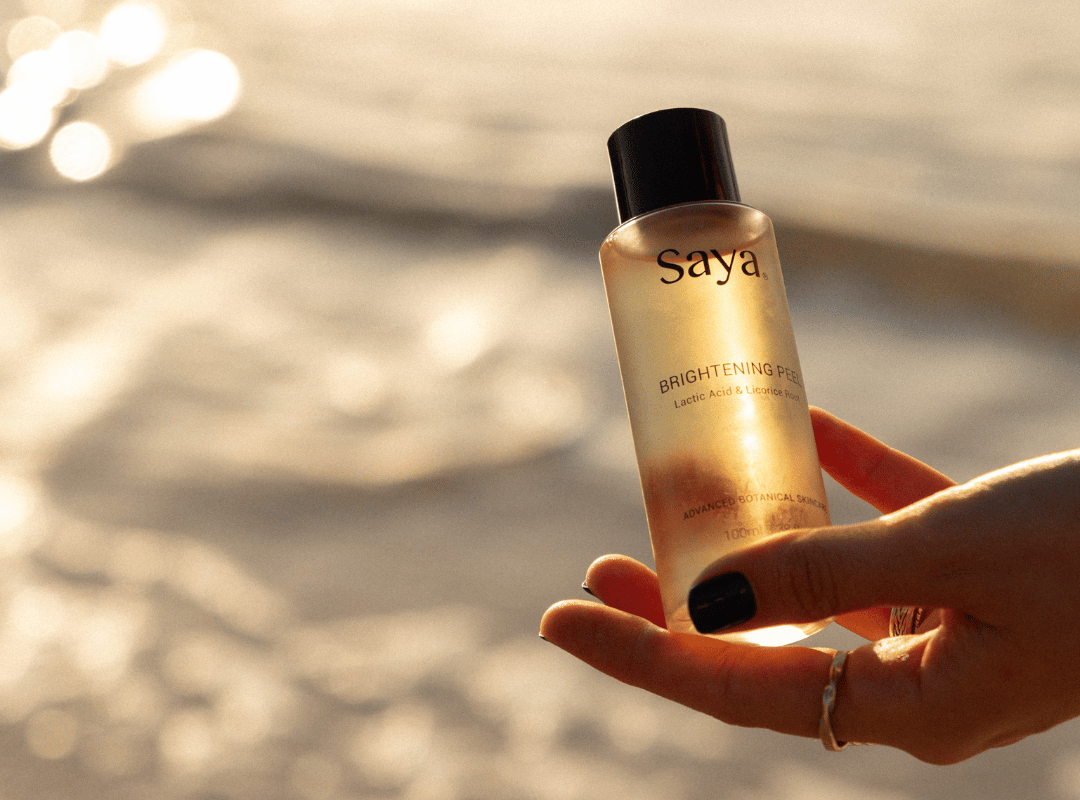
Brightening Peel — Lactic Acid, Kakadu Plum and Licorice
Used two to three evenings per week after cleansing, the Brightening Peel applies lactic acid to accelerate the desquamation process that slows with age. Lactic acid dissolves the desmosomes, the protein bonds that hold dead cells to the surface, clearing the way for the actives applied after to penetrate more effectively. It also increases the skin's natural moisturising factor, so exfoliation here is not drying. It is preparatory. Kakadu Plum delivers ascorbic acid, ellagic acid, and gallic acid directly into freshly exfoliated skin, where elevated nocturnal permeability creates optimal conditions for absorption. Licorice root extract contains glabridin, a tyrosinase inhibitor that addresses hyperpigmentation at the enzymatic level. Used consistently over weeks, the combination produces a measurable improvement in evenness, luminosity, and surface texture.
Super Serum — Peptide Complex with ChroNOline
The Super Serum is the active anchor of the evening ritual. ChroNOline, the chronobiological tetrapeptide at its core, targets the loss of synchrony in the skin's circadian clock directly. As the skin ages, the coordination between its internal clock and the biological processes of overnight repair begins to drift. The result is a gradual reduction in the efficiency of the repair window, and an increase in the signs of fatigue and accelerated ageing. ChroNOline restores that synchrony, making the entire overnight window more productive. Aloe vera provides the anti-inflammatory foundation that keeps the dermal environment calm and receptive. Hyaluronic acid builds the moisture reservoir that holds active ingredients in contact with the skin. Pentavitin anchors hydration structurally to the keratin matrix, ensuring that the moisture in the skin at the start of the evening is still there by morning. Apply to clean skin and press in gently, paying particular attention to the areas of most visible concern.
Renew Serum — Active Botanical Oils
Applied over the Super Serum, the Renew Serum provides the lipid layer that seals active compounds against the skin and supports barrier restoration from the outside in. Rosehip oil, rich in linoleic acid, contributes the essential fatty acid the lamellar structure requires and brings naturally occurring trans-retinoic acid into the overnight equation. Macadamia oil delivers palmitoleic acid to a barrier that produces less of its own sebum with every passing year. Argan oil adds tocopherols that protect the skin's surface lipids from oxidative breakdown during the hours of repair. A botanical oil applied over a serum is not simply a moisturising layer. It is the lipid seal that reduces transepidermal water loss, keeps active ingredients in contact with the skin rather than evaporating overnight, and directly contributes building blocks to the barrier repair process. Warm a few drops in the palms and press onto skin while the serum is still slightly present on the surface.
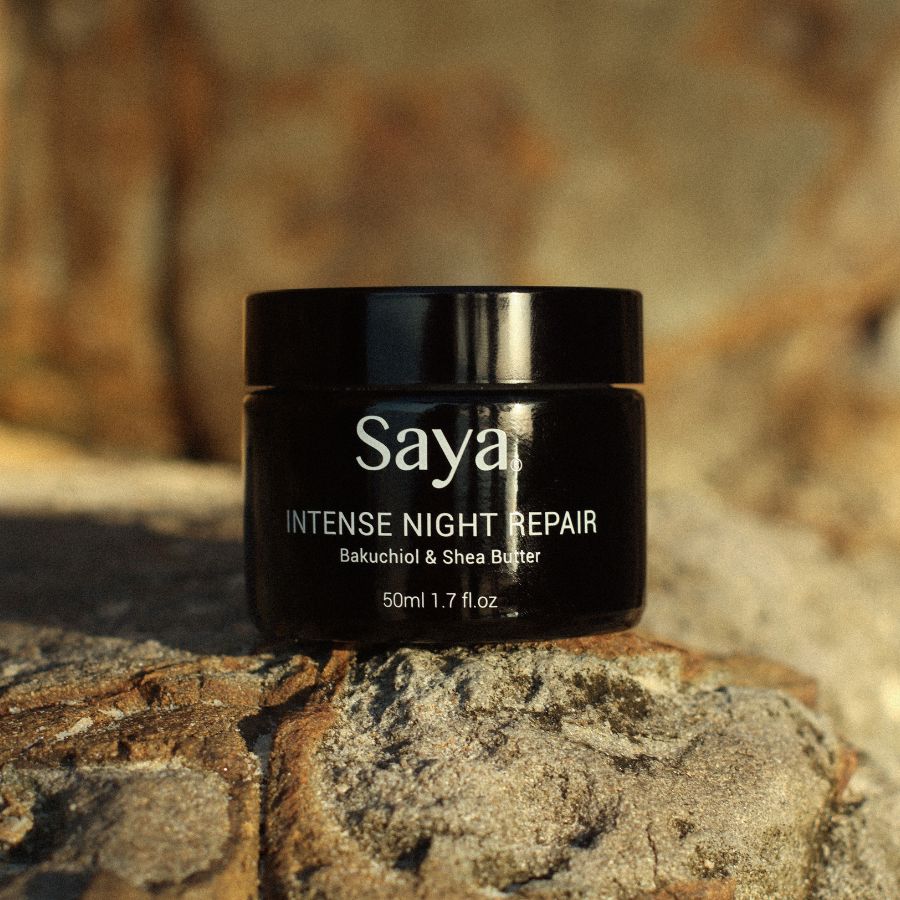
Intense Night Repair — Bakuchiol and Shea Butter
The Intense Night Repair is the final layer. Bakuchiol activates retinoid receptors during the skin's peak division and collagen synthesis window, upregulating collagen expression and reducing the enzymatic breakdown of existing structural proteins, without any of the photosensitivity or barrier disruption associated with retinoic acid. Kakadu Plum vitamin C supports collagen hydroxylation in parallel. Shea butter provides the occlusive and nourishing base. Rich in oleic acid, stearic acid, and triterpene alcohols with anti-inflammatory activity, it delivers the level of nourishment the skin needs overnight, when moisture loss is at its highest and the barrier is most actively rebuilding. The texture is deliberately rich. The skin loses significantly more moisture overnight than during the day. A concentrated cream as the final step holds everything in place and ensures that by morning, the work of the previous eight hours is reflected in the skin.
The Overnight Ritual
The ritual below is sequenced around the skin's biology. Each step builds on the previous one. On peel nights, the Brightening Peel is applied after the Cleansing Balm, before the serum. On all other nights, move directly from cleansing to the Super Serum.
1. Cleansing Balm Every evening
Warm a small amount between the palms and press onto dry skin. Massage across the face and neck, working the balm around the nose, jawline, and hairline where SPF and product residue accumulate. Add a small amount of water to emulsify, then remove with a warm, damp cloth. If wearing heavy SPF or makeup, follow with a second cleanse using the Cleansing Gel.
2. Brightening Peel 2 to 3 evenings per week
After cleansing and patting skin dry, apply a thin, even layer to the face and neck. Leave on and continue with the remaining steps. On non-peel nights, move directly to the Super Serum. Over time, consistent use of the peel transforms the efficacy of every product applied after it, as the surface it is working with becomes progressively clearer and more receptive.
3. Super Serum Every evening
Apply 2 to 3 drops and press gently into the ski n, working from the centre of the face outward. Allow a moment for the peptide complex to absorb before applying the next layer. The ChroNOline tetrapeptide, aloe vera, hyaluronic acid, and Pentavitin in this formula create the active and hydration foundation that makes everything applied after it more effective.
4. Renew Serum Every evening
Warm 4 to 5 drops in the palms and press onto skin while the Super Serum is still slightly present on the surface. The botanical oil complex creates the lipid seal that reduces transepidermal water loss and anchors the actives in the layers beneath it. Skin should feel nourished and settled.
5. Intense Night Repair Every evening
Press the overnight cream onto the face, neck, and decolletage as the final step. Bakuchiol does its most significant work during the midnight to two in the morning peak of cellular division. Shea butter provides the occlusive layer that holds everything in place. Wake up and assess. The difference builds with consistent use.
The evening ritual is worth taking seriously, not because skincare requires ceremony, but because the biology demands it. The skin's nocturnal repair window is finite. It opens reliably every night and closes with the light. What you apply in those hours, and in what sequence, either works with that window or works around it.
Twenty years into this work, the thing that still compels me is how precisely the right ingredient meets the right biological process when you understand both clearly enough. The overnight ritual is where that precision matters most.
Saya McDermott, Founder

Leave a comment
All comments are moderated before being published.
This site is protected by hCaptcha and the hCaptcha Privacy Policy and Terms of Service apply.