

Governed From Within
A Conversation with Hayley Battese, On Sovereignty, Motherhood & Building on Her Own Terms
In our Saya Woman series, we speak to extraordinary women who share their experiences, insights and advice on life, business and everything in between. We hope they inspire you as much as they inspire us.
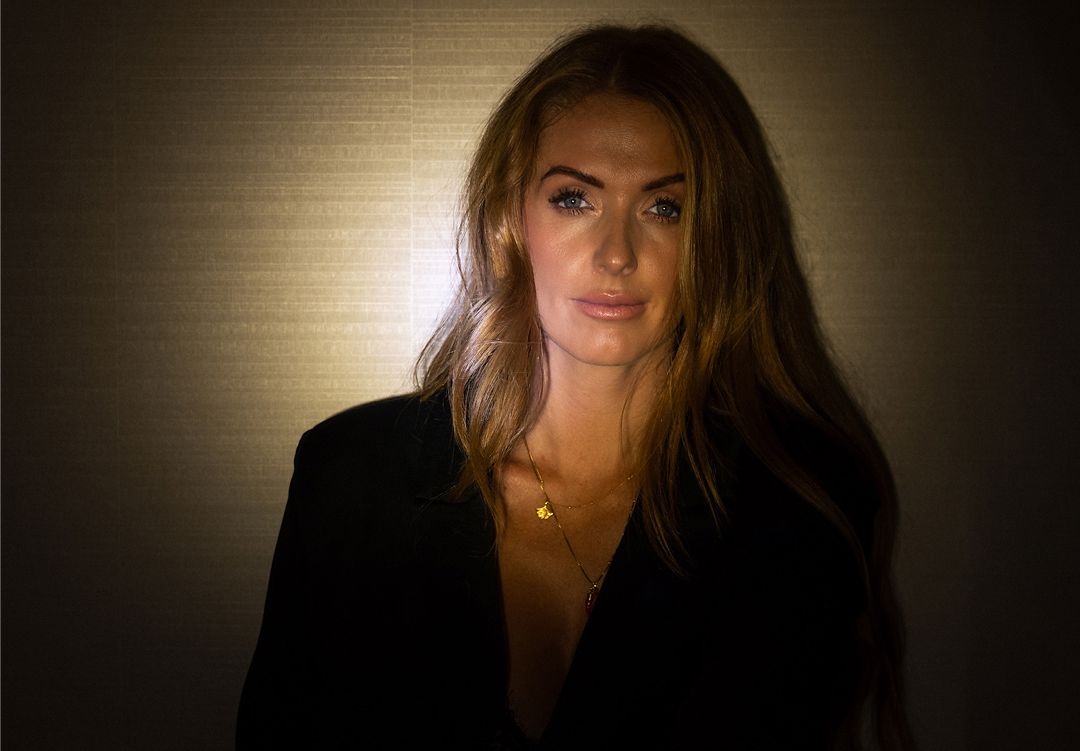
For our Saya Woman Series #19, we sat down with Hayley Battese.
When Hayley Battese reached out to invite Saya into her Sovereign Table events, first on the Gold Coast then Sydney, it didn't take long to see why. Hayley is the founder of The Sovereign Woman™, an Australian platform exploring leadership, identity, wealth and self-governance for women. After walking away from a successful career that no longer reflected who she was, she rebuilt from the ground up, turning a personal search for a different way to live into a movement that challenges conventional ideas of success. Through retreats, writing and The Sovereign Table itself, Hayley creates spaces where women can step away from performance and reconnect with who they are beneath expectation. A mother of four, she believes the most powerful form of leadership isn't influence over others, but an unwavering trust in yourself. We sat down with her to talk about the body's felt sense of sovereignty, the cost of building quietly, and what it means to finally let yourself receive.
1. What does sovereignty actually feel like in the body? Not the concept, the felt sense of it.
Sovereignty feels like an unshakable knowing. It's the feeling of being deeply rooted in yourself, where no circumstance, opinion or outcome has the power to disconnect you from who you are. It's calm rather than loud. Grounded rather than reactive. For me, sovereignty isn't confidence that everything will go to plan. It's the certainty that whatever happens, I'll find my way through it. In the body, it feels like stillness. A quiet strength. A sense of freedom because your identity no longer depends on external validation. No one can take your power because it was never given to them in the first place. You're governed from within.
2. You walked away from the things that no longer reflected who you were. How do you know when something no longer fits?
You feel it before you can explain it. The work begins to drain you instead of expand you. What once felt aligned starts to feel heavy. You find yourself pushing instead of flowing. For me, understanding myself through my values and personal frameworks gave language to what I was already feeling. It helped me recognise when I was operating against my own nature instead of trying to force myself to fit. But the real answer is this: you have to know who you are before you can recognise what no longer belongs. Once you're clear on your values, your integrity becomes your compass. Anything that asks you to abandon that is how you know something no longer fits.
3. You created the room you couldn't find. What did you most need it to hold?
I wanted a room where I didn't have to perform. I'd spent years earning my place in rooms that measured people by status, achievement or what they could offer someone else. Even when I belonged there, I still felt like I had to prove I was worthy of staying. I wanted something different. A place where speaking your truth was welcomed, leadership could be discussed openly, different perspectives were valued and the removal of hierarchy gave way to genuine connection. I wanted a room where the standard carried the space, so the people inside it could simply be themselves. A place where women could remove the masks, speak honestly and still be deeply respected. I often describe it like music. A violin doesn't tell you what to feel, it creates a feeling. That's what I wanted these rooms to hold. Not a performance. A frequency. A standard. A quiet sense of belonging that every woman contributes to simply by being fully herself.
4. What does it cost to operate at a level most people around you can't see?
The biggest cost is often invisible. People see the events, the launches and the milestones. They don't see the moments you question everything. The mornings where you wonder if you're doing enough. The constant mental load that never really switches off. We live in a world where everyone has advice on how you should build your business, your brand or your life. If you're not careful, that noise slowly disconnects you from your own intuition. For me, the greatest discipline has become protecting my attention. Because comparison quietly convinces you that you're behind, even when you're exactly where you're meant to be. The cost isn't hard work. It's learning to keep your inner peace while the world constantly tells you to move faster.
5. How do you care for yourself when the work is invisible to everyone else?
I'm still learning. As someone who naturally thinks in big visions, my mind rarely switches off. There is always another idea, another improvement, another responsibility waiting for me. I've realised that caring for myself isn't about escaping the work, it's more about returning to myself where I can fill my mind with silence. That looks like walking on the beach, nourishing my body with good food, reading, having a massage, spending time in nature or simply slowing down long enough to hear my own thoughts again. I'm also a mother of four, so balance isn't something I've mastered. It's something I practise. I've learnt that if I don't care for myself first, I lose the very clarity I'm trying to bring into the world. My greatest work will always come from a regulated nervous system, not an exhausted one.
6. What has motherhood and building in parallel taught you about where your edges actually are?
Motherhood has taught me that balance isn't something you achieve, it's something you continually renegotiate. There are seasons where my children need more of me, and seasons where my business does. I've stopped believing that I have to do both perfectly at the same time. For a long time I carried guilt, whether I was working or parenting. If I was building my business, I felt I should be with my children. If I was fully present with my children, I wondered whether I should be building faster. What I've learnt is that life moves in seasons, not in perfect balance. My children are my greatest priority, but building something meaningful for them is also an expression of love. I'm creating a life they can one day inherit, not just financially, but through the example of courage, purpose and self-leadership. My edge has been learning that success doesn't have to come at the expense of presence. Business will always be there. Their childhood won't, and that is the time I want to protect the most.
7. Is there a moment where you chose yourself over the version of you that was working for everyone else?
Yes. The day I walked away from my previous business. For years I measured my worth by how much I could give. I overdelivered, overworked and put everyone else's needs ahead of my own, believing that achievement was the price of significance. Walking away meant leaving behind my income, my identity and the certainty I'd spent years building. It was terrifying. But it was also the first decision I made entirely for myself.
There's a saying: If you want to take the island, you have to burn the boats.
That's exactly what it felt like. There was no backup plan. Just a deep conviction that I needed to build something that reflected who I had become, not who the world expected me to be. Choosing myself wasn't selfish. It was the beginning of becoming fully myself.
8. What do you want the women coming after you to inherit that you had to learn the hard way?
I want women to inherit the belief that they don't have to fit into broken systems, they can build new ones. I want them to know that another woman's success doesn't diminish their own. There is room for collaboration, generosity and shared ambition. More than anything, I want women to inherit an unshakable relationship with themselves. To know who they are before the world tells them who they should be. To build financial independence, trust their own voice, care for their bodies and make decisions from self-worth instead of fear. The hardest lesson I learnt was that no amount of achievement will replace the love and validation you haven't given yourself.
Every woman carries an inner child who is still asking, Am I enough?
My hope is that the next generation learns to answer that question for themselves much sooner than I did.
9. Where in your life are you still learning to receive?
Every day. Receiving has always been harder for me than giving. I'm comfortable supporting other people, but when someone offers me a compliment, generosity or genuine encouragement, my instinct has often been to question it rather than simply accept it. I'm learning that receiving isn't weakness. It's trust. The more I've built my own self-worth, the easier it has become to believe the kind words people offer me instead of dismissing them. For me, learning to receive has become an act of self-leadership. It means allowing myself to be seen, appreciated and supported without feeling like I have to earn it first. That's a lesson I'm still practising, and one I suspect I'll keep learning for the rest of my life.
10. What's a belief you held tightly for years that you've quietly set down?
For a long time, I believed there was only one right way to build a life. Go to university. Get the degree. Get the corporate job. Buy the house. Stay in the same career until you retire. Work hard, save your money and that's how you create wealth. I genuinely believed that if you kept changing direction, wanted to travel, reinvent yourself or try different things, it meant you were unreliable or couldn't commit. I remember worrying that if I wanted a day off work it somehow meant I was lazy. If I didn't want to stay in one career forever, there must be something wrong with me. But over time I realised there wasn't. I'm someone who loves to learn. I love new environments, new conversations and new ideas. I get energised by experiencing different things. That isn't instability, it's curiosity. It's how I'm wired. The other belief I've quietly let go of is that working harder automatically creates wealth. It can create income, but it doesn't necessarily create freedom. Learning about investing, assets and how money actually works has completely changed the way I think about building a life. Real wealth isn't just about what you earn. It's about what you own, what you build and what continues to work for you long after you've finished working. I've realised that the life I want was never going to fit inside someone else's definition of success. And that's been one of the most liberating things I've ever learnt.
11. Is there a texture, a scent or a place that brings you back to yourself faster than anything else?
The ocean. The moment I hear the waves or feel the sand beneath my feet, my nervous system settles. It reminds me how small I am in the best possible way. I also love the Australian bush, the scent of eucalyptus after rain, the sound of kookaburras, rolling green hills and being surrounded by animals. There is an honesty in nature that asks nothing of you except to be present. When life becomes noisy, nature brings me back to what is real. It reminds me that before I'm a founder, a mother or a leader, I'm simply a human being sharing this extraordinary planet.
12. What are you just beginning to understand about yourself?
I'm beginning to understand that I don't have to carry every vision alone. For a long time, I thought strength meant doing everything myself. Now I realise that some visions are too important to build in isolation. I'm also learning that my greatest strength is seeing possibilities before other people see them. The challenge isn't vision, it's giving myself permission to build patiently. Everything has always felt urgent to me. Every idea feels important. Every opportunity feels like it needs to happen now. I'm learning that urgency and importance aren't the same thing. The woman I'm becoming trusts that what's meant for her doesn't require panic. It requires presence, patience and the courage to take the next right step.
Read more

Leave a comment
All comments are moderated before being published.
This site is protected by hCaptcha and the hCaptcha Privacy Policy and Terms of Service apply.