

The science of AHAs
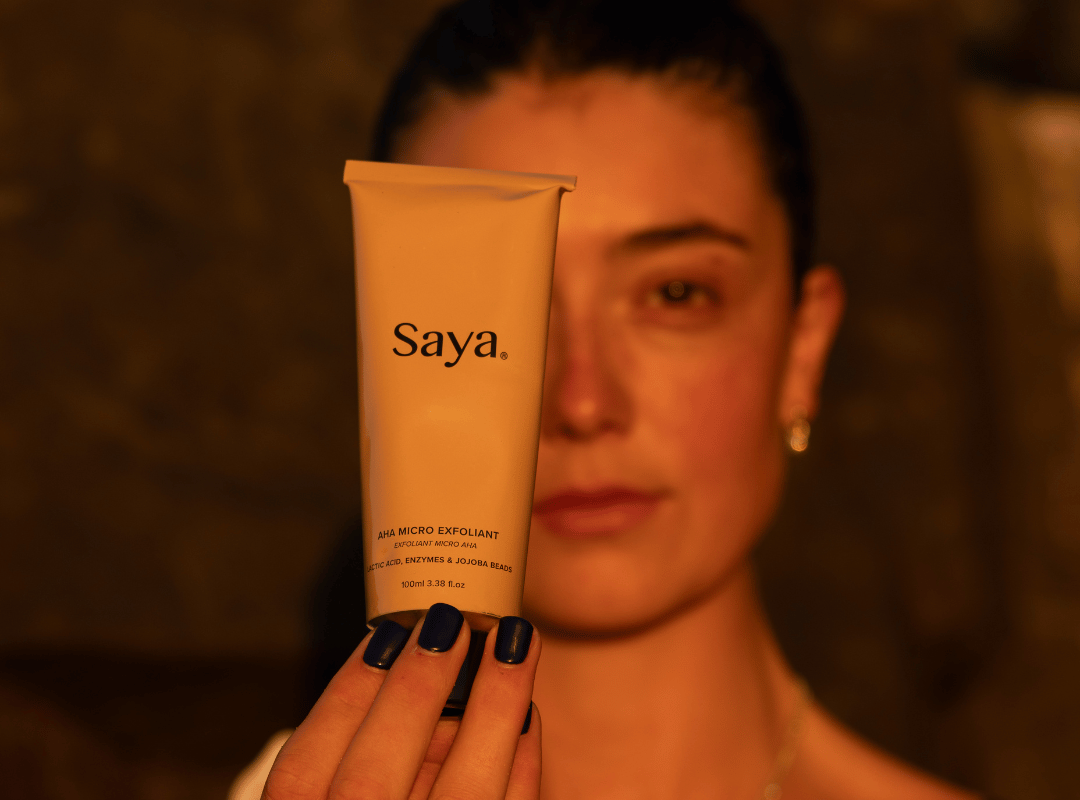
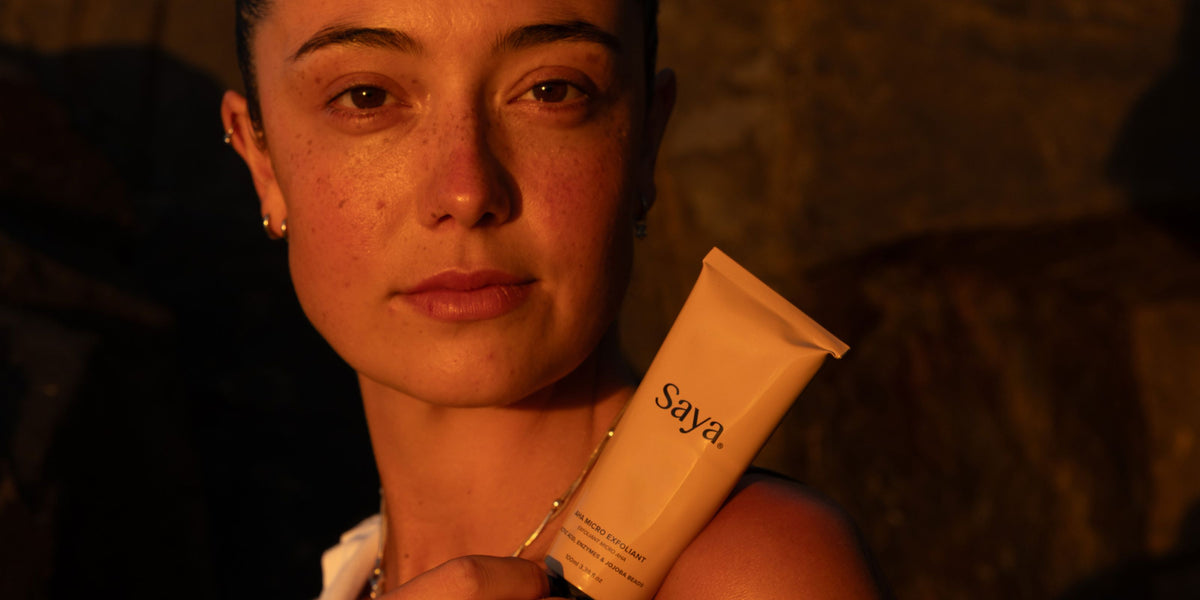
A closer look at the AHA Micro Exfoliant
Exfoliation is one of the oldest rituals in skincare, and one of the most misunderstood. Most of us know it leaves skin feeling smoother. Far fewer of us know what's actually happening beneath our fingertips, or why one exfoliant suits a friend's skin beautifully and leaves ours feeling tight.
This is a closer look at alpha hydroxy acids, the family of ingredients at the heart of our AHA Micro Exfoliant. We'll go into the chemistry, the biology of how skin renews itself, and the considerations worth understanding before reaching for any acid. The more you understand your skin, the more confidently you can care for it.
How skin renews itself
Your skin is constantly letting go. Its outermost layer, the stratum corneum, is made of roughly 15 to 20 layers of flattened cells called corneocytes. These cells are no longer living. They're packed with keratin and form a protective shield, holding water in and keeping environmental stressors out.
This layer is often described as a brick wall. The corneocytes are the bricks. The mortar is a carefully balanced blend of lipids: ceramides, cholesterol, and free fatty acids. Holding the bricks together are tiny protein rivets called corneodesmosomes.
New cells form at the base of the epidermis and travel upwards over several weeks. As they reach the surface, the skin's own enzymes break down the corneodesmosomes and the oldest cells shed. This process is called desquamation, and when it works well, it's invisible.
Those enzymes are particular about their conditions. They need water and a slightly acidic environment, which is why skin's natural surface pH sits around 4.5 to 5.5. When skin is dry, when its pH drifts, or as we age, desquamation slows. Cells linger and stack unevenly.
Light then scatters across that uneven surface instead of reflecting cleanly, which is what we see as dullness. Texture feels rougher, pores can look more congested, and the serums and moisturisers we apply sit on top rather than settling in.
Exfoliation isn't about forcing skin to do something new. It's about supporting a process skin already knows how to do.
What an AHA actually is
Alpha hydroxy acids are a group of organic acids that share one structural feature. Each has a carboxylic acid group, the part that makes it an acid, and a hydroxyl group attached to the carbon right beside it, known as the alpha carbon. That positioning gives AHAs their name and their particular behaviour on skin.
AHAs are water-soluble, so they work mostly at the surface, among the water-loving spaces between corneocytes. This is a key difference from beta hydroxy acids such as salicylic acid, which are oil-soluble and can travel into the sebum-filled pore.
The AHA family is larger than most people realise.
| AHA | Common source |
Molecular weight (g/mol) |
Character on skin |
| Glycolic acid | Sugarcane | 76 | The smallest AHA; moves quickly and works intensely, with the most potential to sting |
| Lactic acid | Milk and plant fermentation (we use vegan only)
|
90 | Gentle and hydrating; closely linked to the skin's own moisture factor |
| Malic acid | Apples | 134 | Mild exfoliation, often used in blends |
| Tartaric acid | Grapes | 150 | Mild exfoliation with antioxidant qualities |
| Mandelic acid | Bitter almonds | 152 | Larger and slower, often chosen for reactive skin |
| Citric acid | Citrus fruits | 192 | Gentle exfoliation; also an antioxidant and pH balancer |
Size matters here. The smaller the molecule, the more easily it moves through the stratum corneum, and the faster and more intensely it works. That speed can be useful, but it comes with a greater chance of stinging, redness, and sensitivity. Larger AHAs move more slowly and evenly, which is kinder to the skin barrier.
What happens when an AHA meets your skin
Once applied, an AHA begins working on the bonds between corneocytes in the upper layers of the stratum corneum. The leading scientific explanation centres on calcium. Calcium ions help keep corneodesmosomes and the adhesion proteins within them firmly bound.
AHAs can bind to calcium, drawing it away from those connections. With fewer calcium bridges holding them in place, the oldest cells loosen and shed more readily. The surface becomes more uniform, light reflects more evenly, and skin is better able to receive what follows.
Why pH matters as much as percentage
An acid's activity on skin depends on two numbers working together: its concentration and the pH of the formula. Every acid has a pKa, the pH at which half of it exists as free acid and half has become a gentler salt form. For lactic acid, the pKa is about 3.9.
It's the free acid that does most of the exfoliating. A formula with a pH well below its acid's pKa has more free acid available, so activity is stronger and stinging more likely. A formula closer to or above it has less free acid, softer activity, and greater comfort.
This is why two products with the same percentage of AHA can feel completely different on skin. Good formulation finds the point where an acid is active enough to work and gentle enough to use consistently. Formulators often partially buffer acids for exactly this reason, trading a little intensity for a lot of comfort.
Two exfoliants with the same percentage of acid can behave entirely differently. pH tells the other half of the story.
Why lactic acid leads the formula
Glycolic acid is the best-known AHA, and for good reason: it's fast and potent. But for a formula designed to be used up to three times a week on a wide range of skin, including sensitive skin, we wanted an acid that could bring visible smoothness without pushing the barrier.
Lactic acid offers that balance. Its slightly larger molecule moves through the stratum corneum more slowly and evenly than glycolic, so it's less likely to cause stinging or redness. Some research also suggests it may support the skin's own production of ceramides, the lipids that form part of the barrier's mortar.
It's also a humectant, drawing water into the skin. Its salt, sodium lactate, is a natural component of the skin's natural moisturising factor, so applying it offers skin something it already recognises. And because the skin's shedding enzymes need water to work, well-hydrated skin is better able to renew itself between treatments.
We chose lactic acid because it exfoliates and hydrates at the same time. Skin feels smoother, never stripped.
For skin that has been reactive, as our founder Saya's was for many years, that difference matters. Exfoliation only works if it's something skin can welcome week after week.
Inside the AHA Micro Exfoliant: three methods in one
Most exfoliants rely on a single method. The AHA Micro Exfoliant brings together three, each working differently on the skin's surface. Developed over two years, the formula pairs them so that no single method needs to work too hard.
Chemical: lactic acid and a phyto fruit complex
Lactic acid is supported by a fruit complex of bilberry, sugarcane, orange, lemon, and sugar maple extracts. Together, these provide a natural spectrum of AHAs, including glycolic, lactic, citric, malic, and tartaric acids. A blend of acids of different sizes spreads activity across the surface rather than concentrating it in one intense hit. The fruit extracts also bring antioxidant support, helping defend skin against environmental stressors.
Enzymatic: papaya, pineapple, and mango
Fruit enzymes work in an entirely different way to acids. Papain, from papaya, and bromelain, from pineapple, are proteolytic enzymes, meaning they break down proteins. They target the keratin in dead surface cells, loosening it in a process that works almost like a gentle digestion. Mango enzymes add a softening quality to the finish.
Enzymes are large molecules, so they stay at the very surface of the skin and act only on cells that are ready to leave. They also need time to work. This is why leaving the AHA Micro Exfoliant on as a mask for two minutes deepens the treatment.
Physical: finely milled jojoba beads
The final layer is a soft physical polish. Jojoba beads are derived from jojoba oil and are perfectly spherical and uniform in size. Crushed shells and kernels have sharp, irregular edges that can cause micro-tears. A sphere simply rolls across the skin, lifting away cells the acids and enzymes have already loosened. The beads are also fully biodegradable.
The base: aloe vera and native plums
All of this sits within a creamy base of aloe vera and native plums, which soothe and replenish while the actives work. It's this cushioning texture that makes the treatment feel comforting rather than abrasive.
Each method does a little, so none has to do too much. That's where the gentleness comes from.
The Brightening Peel: a leave-on counterpart
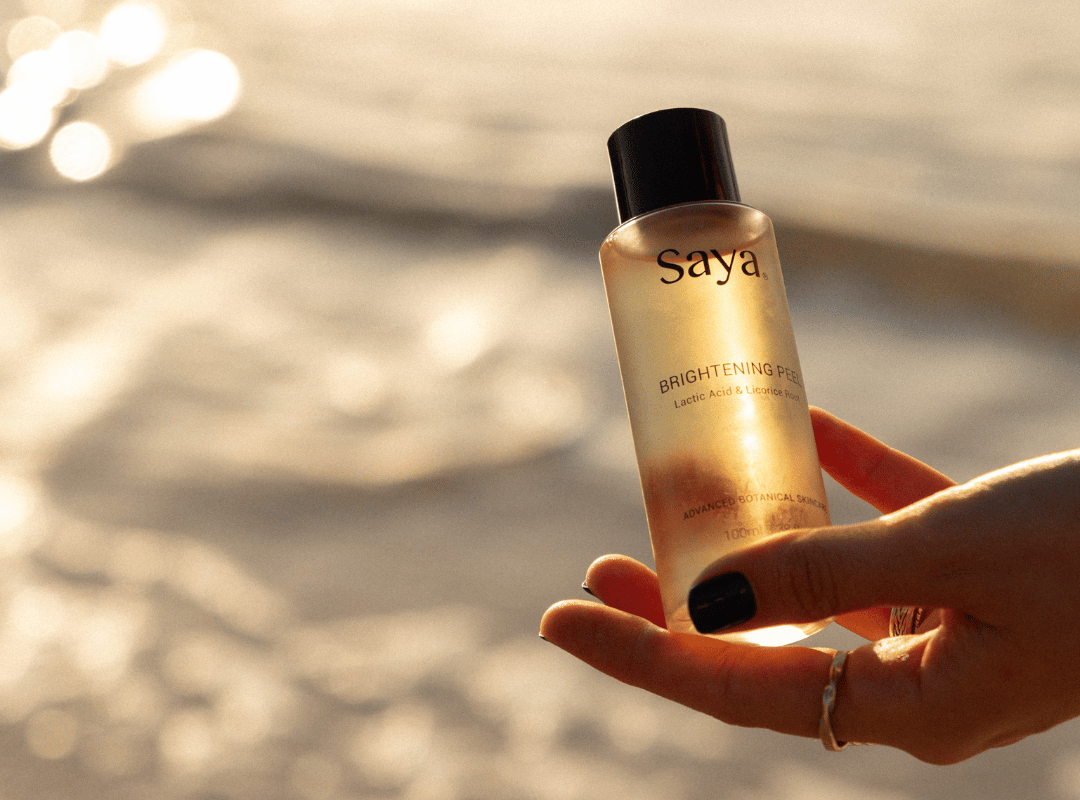
The AHA Micro Exfoliant is one of two exfoliants in the Saya range. Its counterpart, the Brightening Peel, takes a different approach: a lightweight, leave-on lotion that works quietly overnight, purely through chemical exfoliation.
It's formulated with 7.5% lactic acid, a fruit-derived AHA complex at 2.5%, azelaic acid, and licorice root. Where the AHA Micro Exfoliant gives an instant polish, the Brightening Peel builds clarity and smoothness gradually with regular use. It's best used one to two nights a week, and many in our community alternate the two on separate nights, choosing based on how their skin feels.
Different exfoliants for different skin
There's no single best exfoliant, only the one that suits your skin at a given time. Different skin tends to respond to different methods, and each of our two exfoliants has its place.
| Skin | What it tends to need | Exfoliation that suits | Saya exfoliation | How often |
| Dry or dehydrated | Shedding that doesn't take moisture with it | Hydrating AHAs like lactic acid, in cream-based textures | AHA Micro Exfoliant | One to two times a week |
| Oily or congested | Clarity within the pore as well as on the surface | An oil-soluble BHA such as salicylic acid, alongside surface AHAs | Brightening Peel | One to two nights a week |
| Sensitive or reactive | Low irritation and a protected barrier | Enzymes, lactic acid, or PHAs, used less often; patch test first | AHA Micro Exfoliant | Once a week, building slowly |
| Mature | Support for slower renewal and a drier surface | Regular, gentle AHAs with hydrating qualities | Both, AHA Micro Exfoliant and Brightening Peel on separate nights | Brightening Peel one to two nights a week, AHA Micro Exfoliant once a week |
| New to exfoliating | An approachable starting point | A gentle rinse-off exfoliant, building slowly | AHA Micro Exfoliant | Once a week, building to three times a week |
Polyhydroxy acids, or PHAs, deserve a mention. Gluconolactone and lactobionic acid are close relatives of AHAs, carrying several hydroxyl groups and a much larger molecule. They work slowly and gently at the surface, which is why they're often chosen for very reactive skin.
The best exfoliant isn't the strongest one. It's the one your skin can welcome consistently.
Using AHAs mindfully
AHAs have been used in skincare for decades and are well understood. With sensible concentrations, considered frequency, and daily sun protection, regular use is well tolerated by most skin. A few things are worth knowing.
Sun sensitivity
Because AHAs lift away the outermost cells, freshly exfoliated skin can be more sensitive to UV. Apply a broad-spectrum sunscreen every day while using AHA products. Using AHA treatments in the evening also gives skin a night to settle before sun exposure.
Recognising over-exfoliation
Skin gives clear feedback when it's had enough. Signs include tightness, stinging from products that usually feel comfortable, a shiny or waxy look without oiliness, redness, or new flaking. When this happens, pause all exfoliation and keep to a gentle cleanser and a nourishing moisturiser. Reintroduce slowly once skin feels calm again.
Layering with other actives
- Retinoids: use on alternate nights rather than layering together.
- Vitamin C: L-ascorbic acid is also low in pH, so it's best kept to mornings, with AHAs in the evening.
- Other exfoliants: keep to one exfoliating treatment per evening, using the AHA Micro Exfoliant and Brightening Peel on separate nights.
- Treated or compromised skin: wait if skin is broken, sunburnt, freshly waxed, or in a flare, and follow your practitioner's guidance after in-clinic treatments.
Pregnancy and breastfeeding
Skin often changes during pregnancy, and many people reassess their products during this time. We always recommend speaking with your doctor or midwife before introducing or continuing any active ingredient while pregnant or breastfeeding.
Patch testing
Before using any new exfoliant, apply a small amount to the inside of the forearm, use it as directed, and check how skin feels over the next 24 hours.
Exfoliation should leave skin feeling comfortable and calm. If it doesn't, that's your skin asking for a pause.
Bringing the AHA Micro Exfoliant into your ritual
The AHA Micro Exfoliant can be used up to three times a week, ideally in the evening.
- Double cleanse with the Cleansing Balm to lift away makeup, sunscreen, and the day.
- On dry skin, massage a small amount of the AHA Micro Exfoliant over the face, neck, and chest in circular motions for about one minute. Applying to dry skin lets the acids and enzymes make full contact without dilution.
- Add a little water for slip, continue massaging, then rinse.
- For a deeper treatment, apply to dry skin and leave on for two minutes as a mask before rinsing.
- Mist with the Rose Hydrating Mist.
- Follow with the Renew Serum, Intense Night Repair, and Eye Cream.
Exfoliation, understood
At its best, exfoliation is quiet support for a process skin already knows. Understanding how AHAs work, why pH and molecule size matter, and which exfoliant suits your skin turns a single step into an informed choice.
The AHA Micro Exfoliant was created in Noosa with that understanding at its centre: three gentle methods working together, a hydrating acid at its heart, and a texture that makes the ritual something to look forward to.
We invite you to discover the AHA Micro Exfoliant.
Read more

Leave a comment
All comments are moderated before being published.
This site is protected by hCaptcha and the hCaptcha Privacy Policy and Terms of Service apply.